Blog

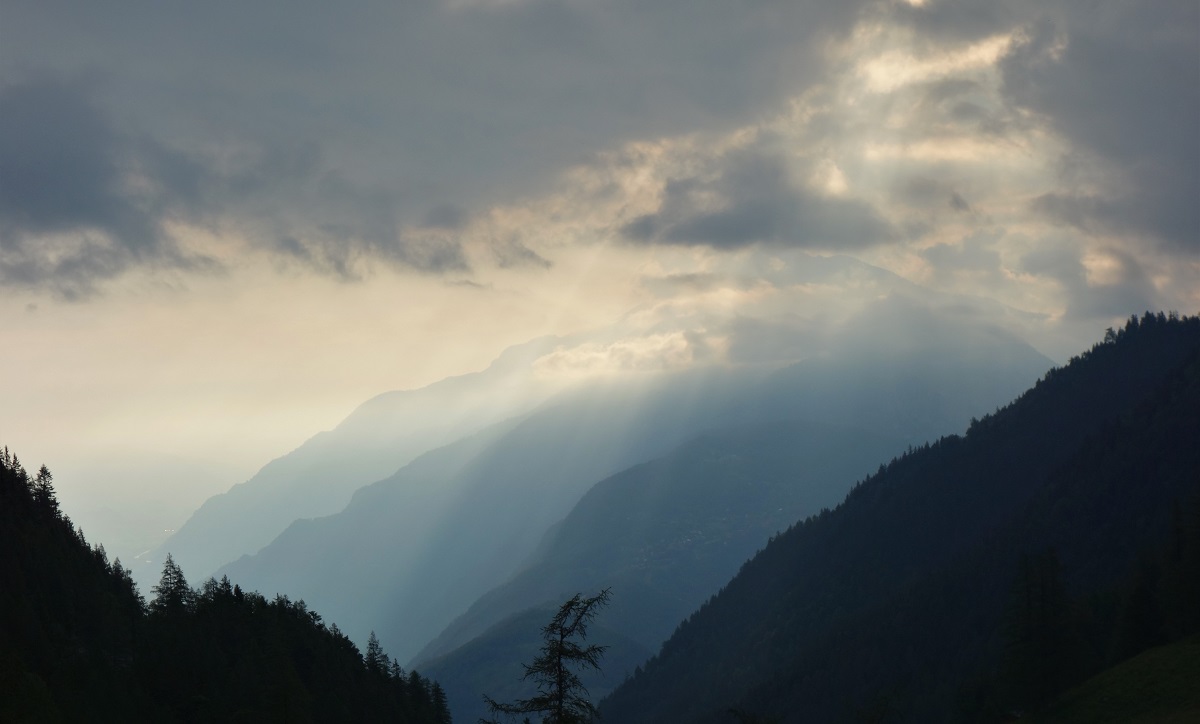
  • Feel the serenity.

    Feel the serenity. And feel small. That's the other thing hills do for you.

    Everyone loves a good bit of content. A little creative framing of the background, your best insta-face, appropriate filter, add a witty “zinger” of a caption. Sorted.

    Problem is, once you’ve got a few good contents under the belt your start needing to get something a bit……more…..to get the same hit. Like.

    Flowers, sporting equipment, in and out of focus objects, blues and greens and a bit of filter to help them along. Instagold. Which I think was a 'coffee' brand in my youth.

    Then, quicker than you can re-write some tired broadsheet copy from the last decade, you’re hanging backwards off a large building in Abu Dhabi. Or biking for 2 days to get to a totally improbable descent on your bike. Obviously one of these situations will be more relevant to most of yous.

    Which is why last weekend, Toby, Tim and me found ourselves hiding underneath an overhang in a large couloir as raindrops the size of smarties battered down around us.
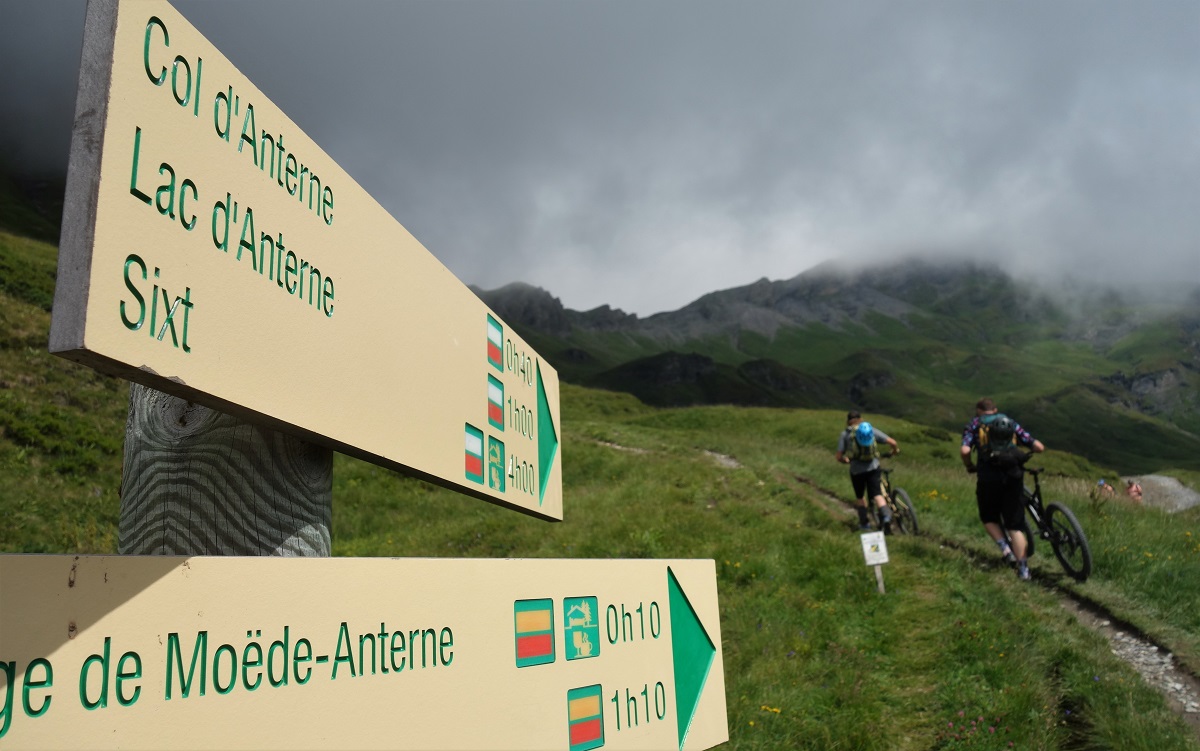
    Back to where we started, or a couple hours in from there at least.

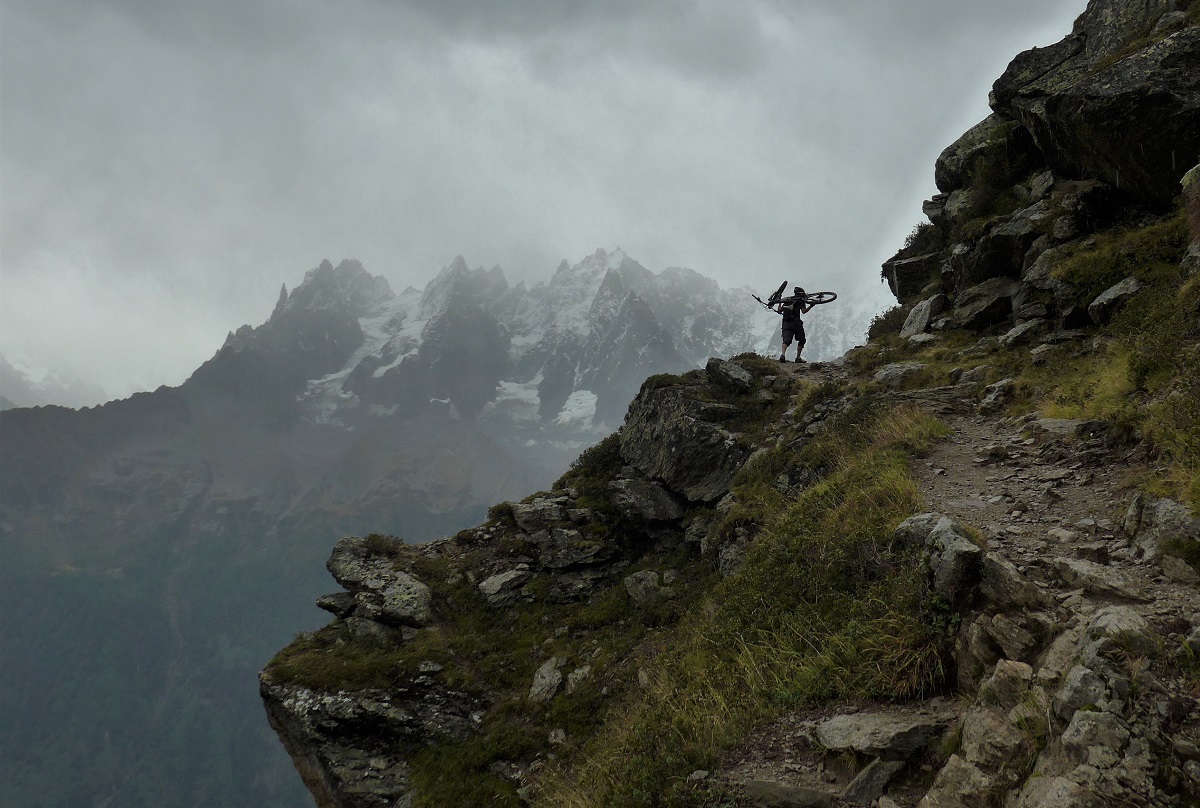
    Obviously we didn’t start at this point. We started in Plaine Joux, a bit above Servoz, with a pedal out of the ski area and up towards the Chalets Souay, then up towards the Refuge Moede Anternne, then up towards the Col du Mode Anterne. I say pedal, there was a fair bit of pushing in there. And a bit of carrying. Which kinda started a theme.

    Climbing 1000m doesn’t make for great content. Normally the slow pace means you get plenty of little rider/big scenery shots but the weather was treating us to 7/8ths cloud cover. This was grand news for my pasty Scottish skin but kinda hides the Mont Blanc and Chamonix Aiguilles banger backdrop we were hoping for. So we had to speak to each other and just get on with the climb instead.
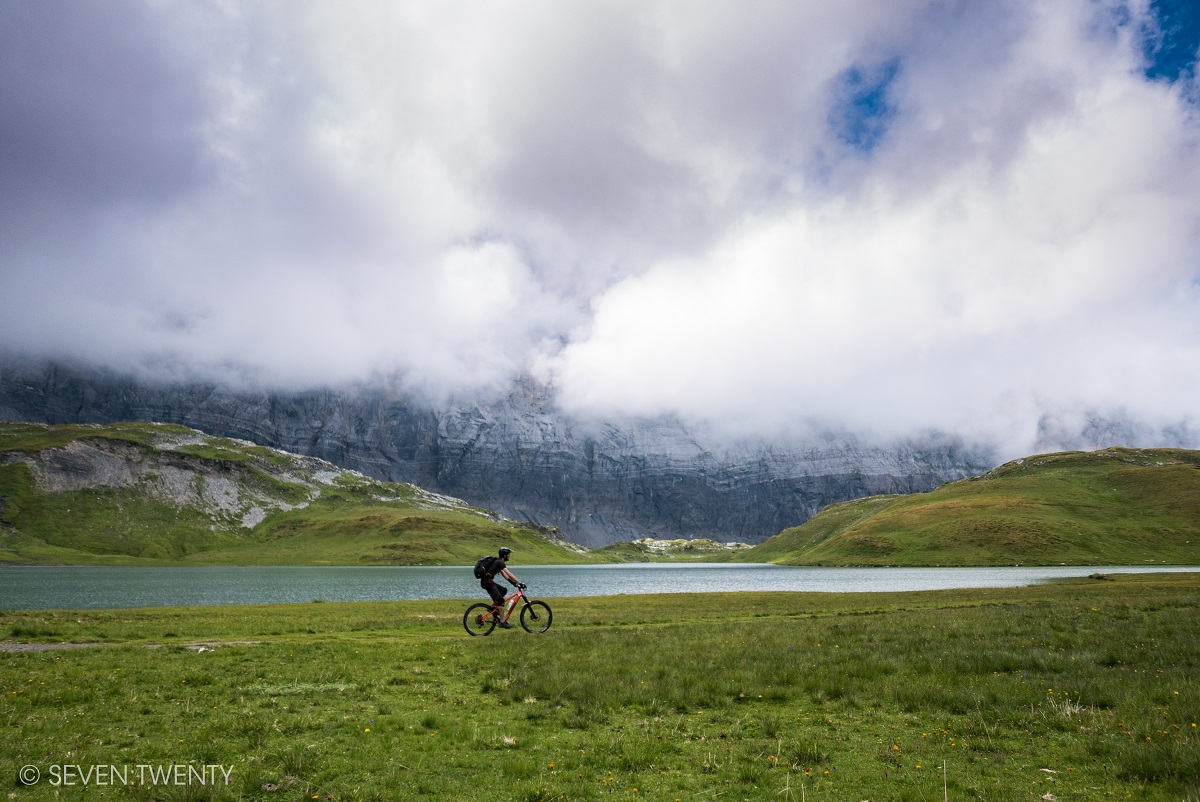
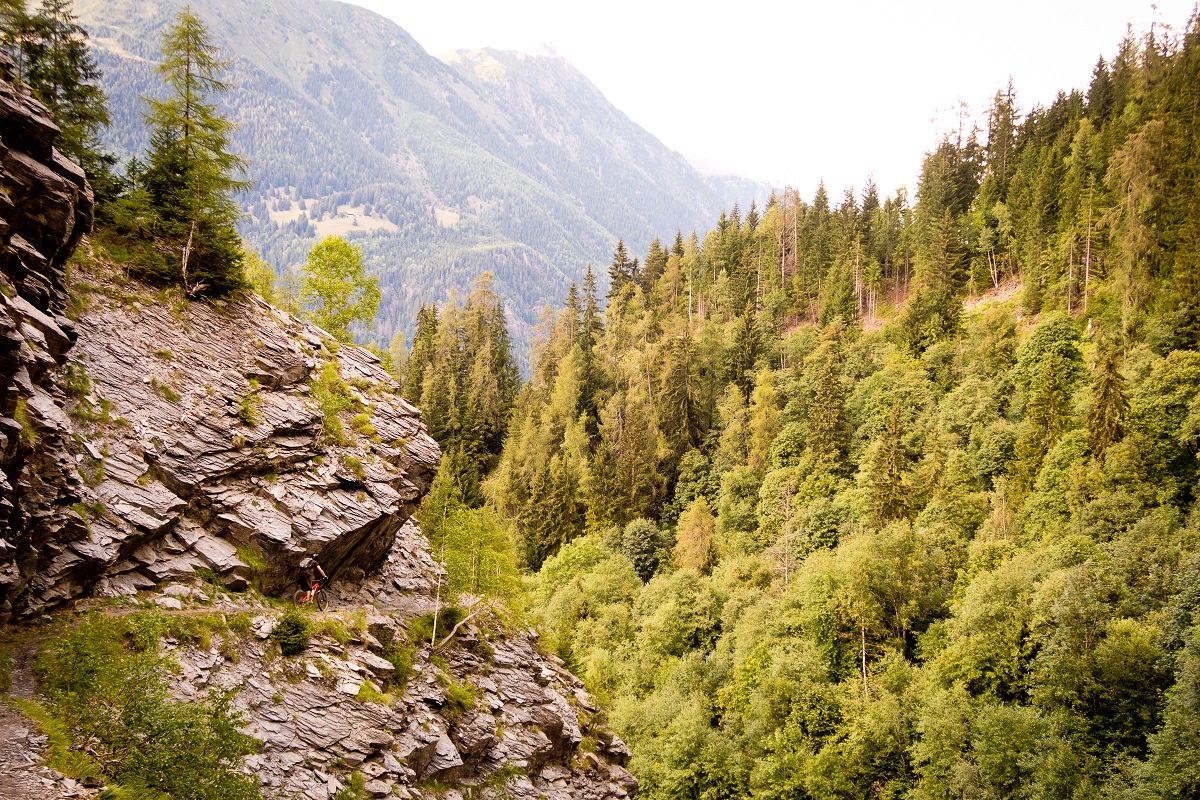
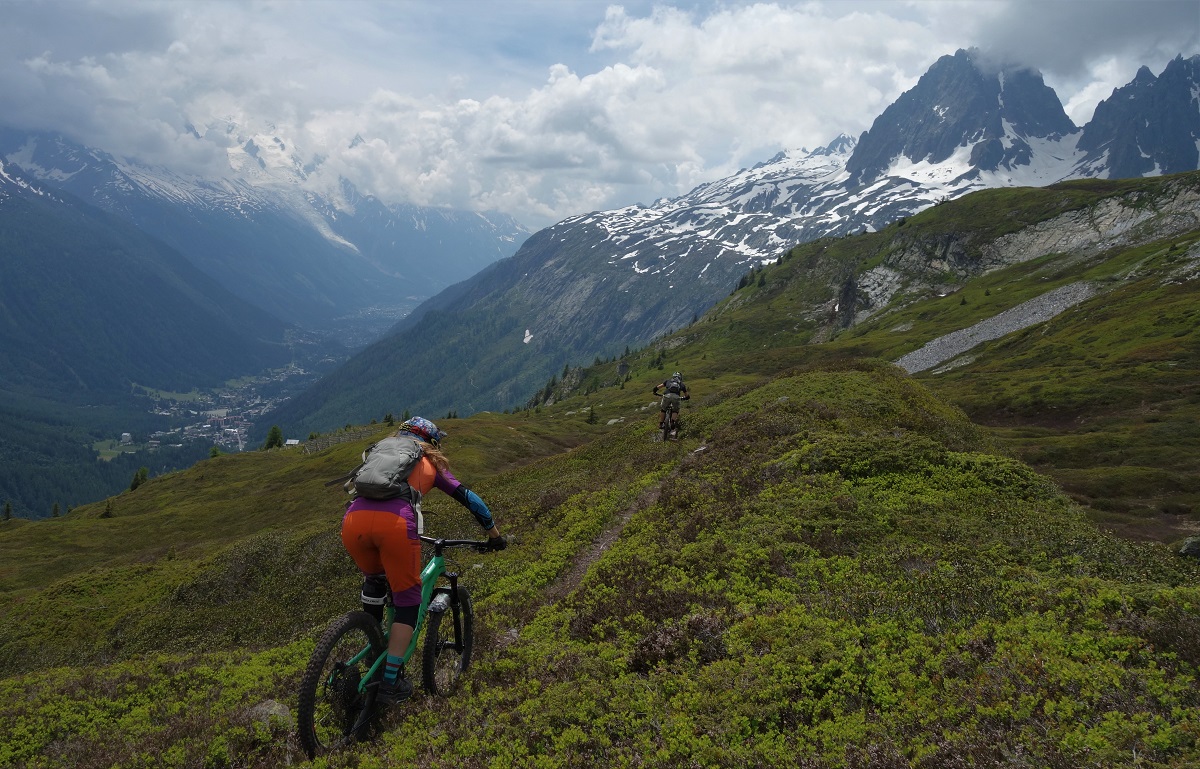
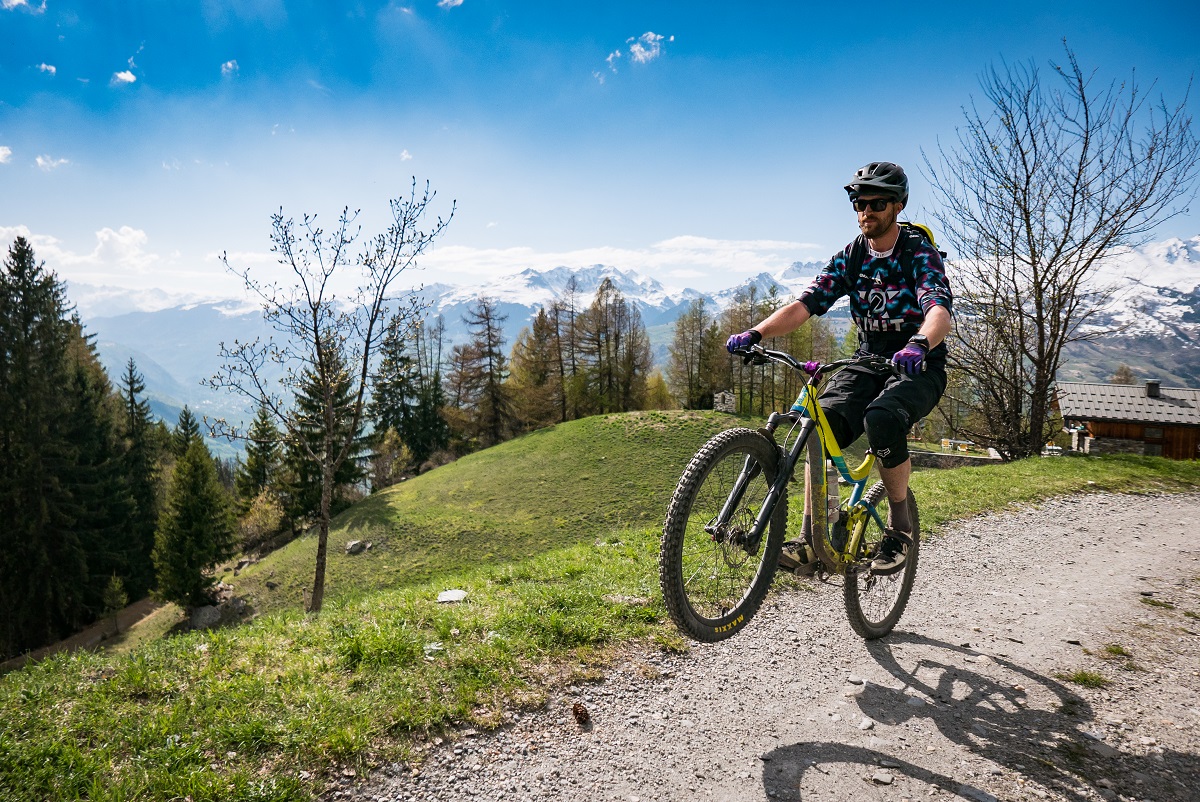
    Too cloudy for climbing shots, fortunately Toby could muster up this one of some scenic traversing.

    Once over the col and on with the assorted padding and protection modern biking fashion and injuries dictate the content creation didn’t get much better. The descent from Col d’Anterne down past the Lac d’Anterne is normally framed by the massive limestone cliffs of the Fiz on one side and the rolling Scottish (slash Lake District slash Kiwi, the problems of going biking with foreigners) hills on the other. When we got there, it was framed by cloud. Not to worry, the trail is just as good irrespective of whether it’s bathed in sunshine or if the weather’s gone for an early bath. It’s also entertainingly unpredictable, with multiple line choices and several moments where what looks benign trail suddenly turns quite engaging.

    To infinity....and beyond! Or oblivion. It might be oblivion over that edge.

    So far so good, but so known. The ride to here had already been done, dusted and put online, at which point Jamie Carr had pointed out to me that there was a better descent than the line we’d ridden down to the Refuge d’Anterne Alfred Wills. Which is why we turned right just after the Lac d’Anterne towards the catchily titled “Le Petite Col ou Bas du Col d’Anterne” and into Terra Nova. Well, nova for us. The worn path on the ground and fact there was a sign pointing where to go makes it about as undiscovered as America or Australia was. Meh, we’re white and male and we’re claiming it as ours.
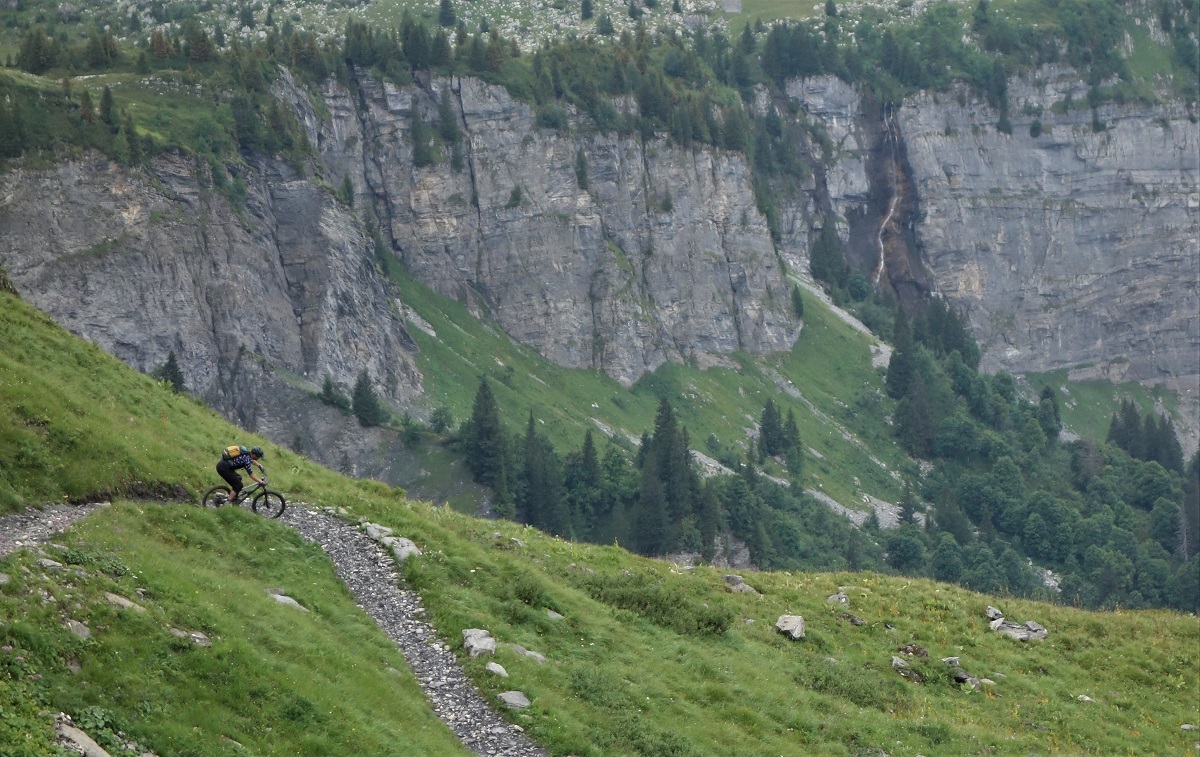
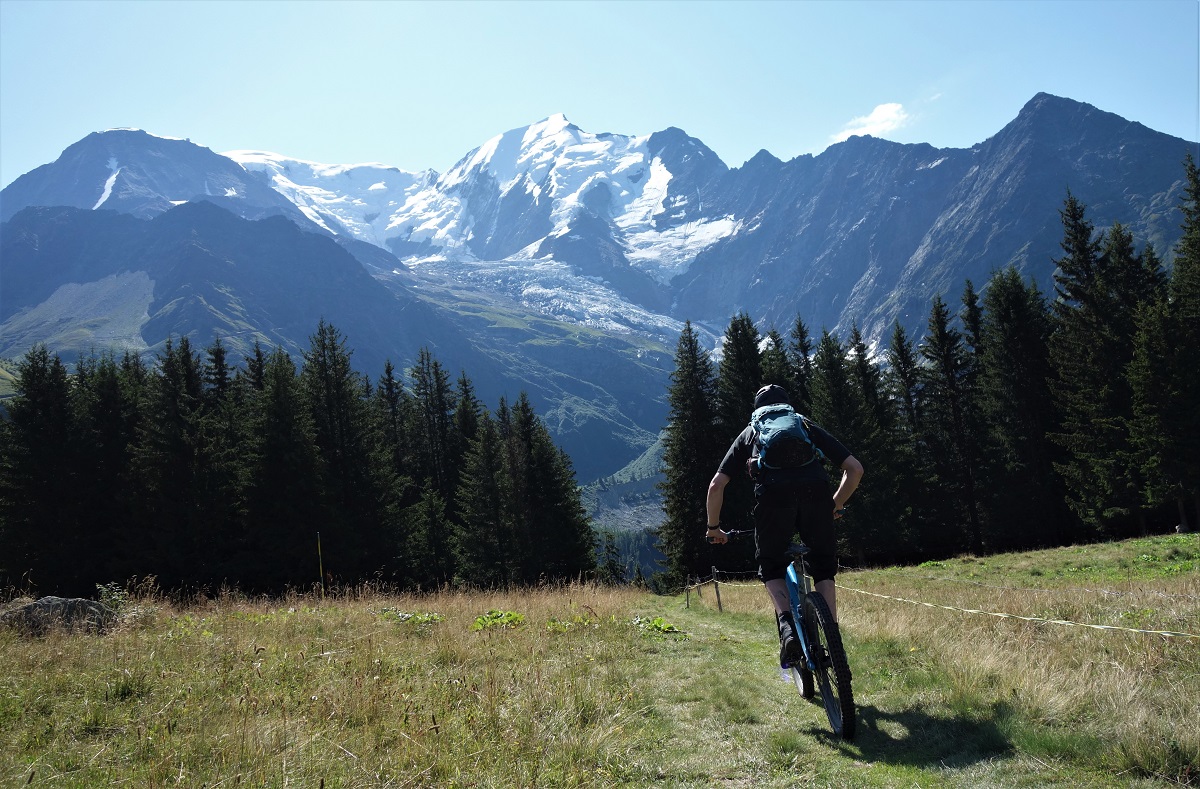
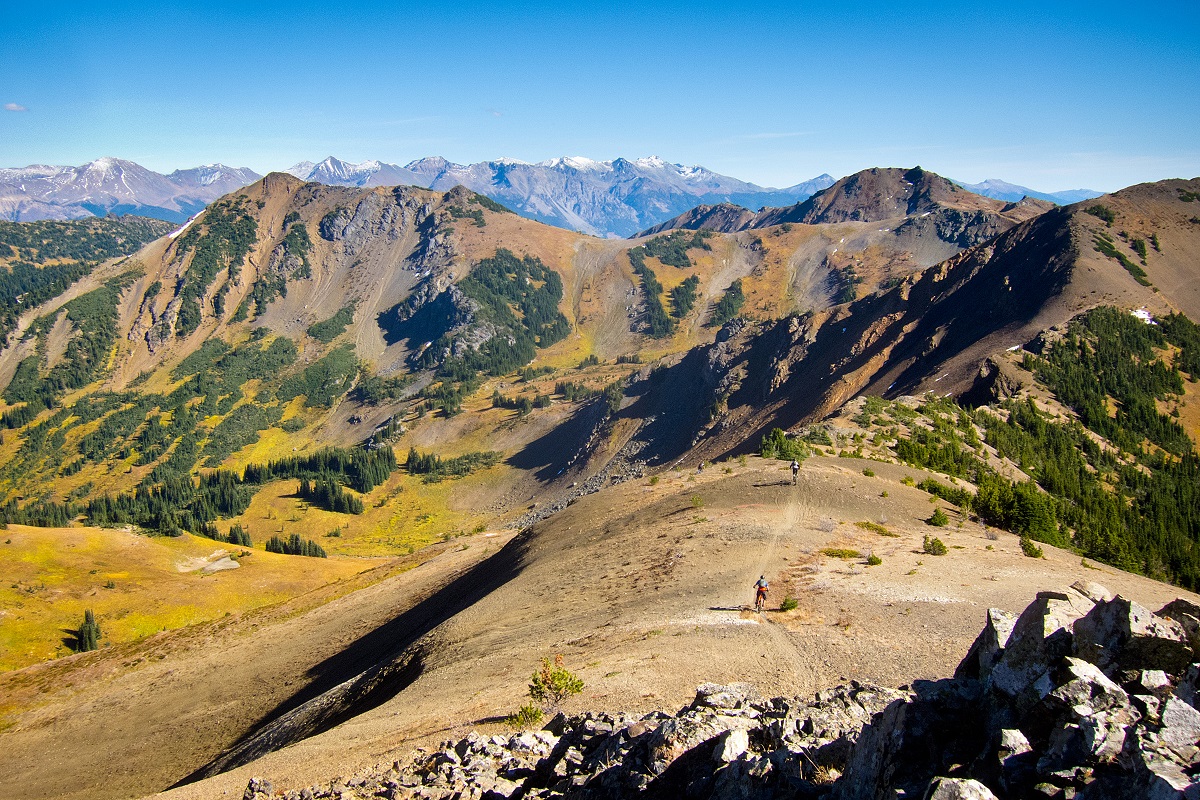
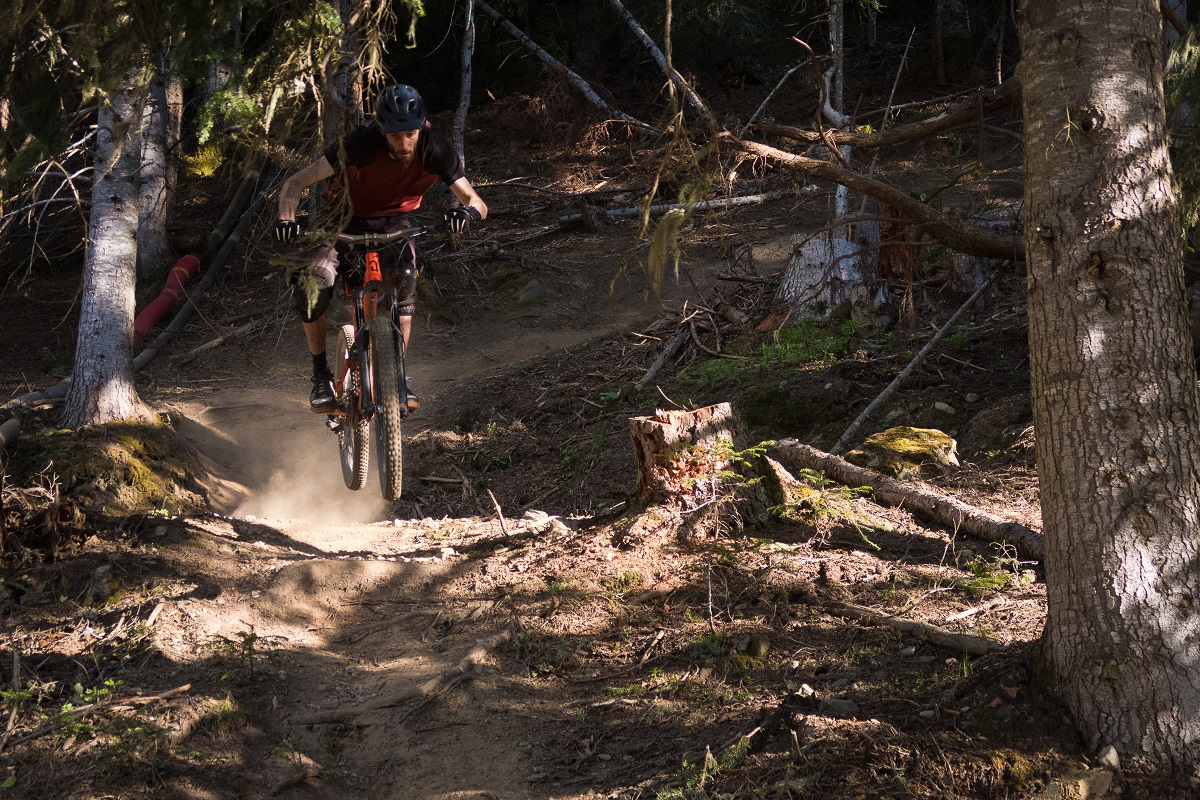
    Toby being the small biker in big scenery. As Toby is 6 foot 7 and riding an XL Mega, you get a good idea of the size of the big scenery.

    Turns out that as one of the original UK alps mountain bike guides, previously a world champs racer and currently a long time resident of the Grand Massif, Mr Carr does indeed know his good descents. After the scenic traverse towards the savage west face of Mt Buet the descent drops into a Mordor esque cirque. The deep greens around us start to blur as the trail eggs you on to ride quicker and quicker. It’s not a difficult trail but it’s plenty fun. As it’s worn into the hillside you’ve almost always got some form of support on the outside of each curve and the drainage ditches have mellow walls that let you manual, hop or bounce over and out as you feel like. And, as the gradient never gets too steep, you get massive value out of the 700m you descend to the hut.
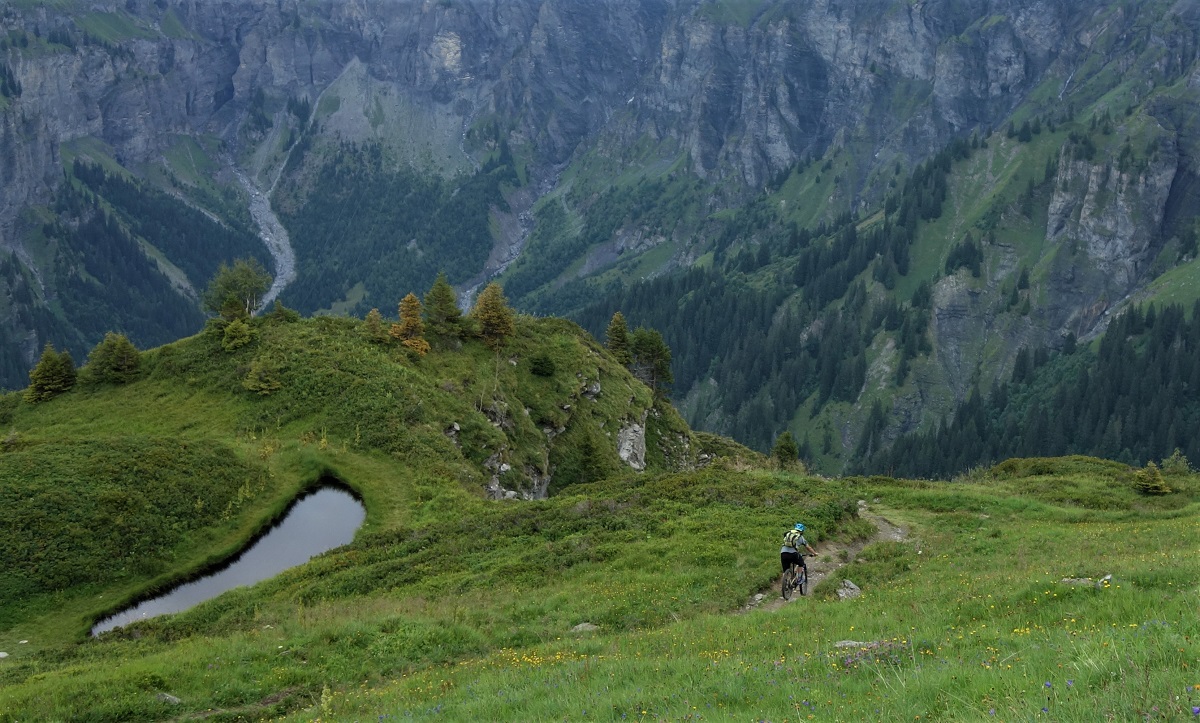
    Tim heads for the hut. Quickly. No one want to be an orc snack.

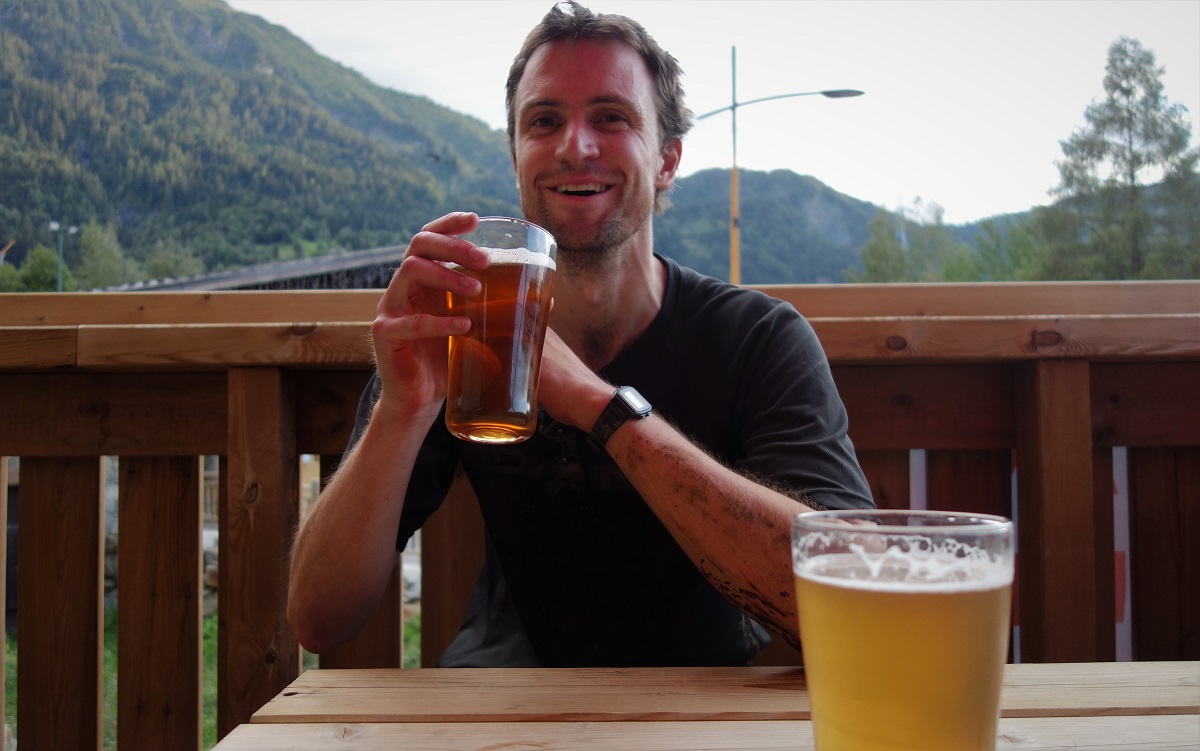
    The hut, Refuge des Fonts. Overnighting is a sure fire way to up the value of your content from a trip. Doesn’t matter if it’s climbing, skiing, kayaking or biking. Stay overnight, fire some shots of chillaxing at the end of a long day onto your socials, mibbies add a couple of star studded sky images or a long exposure of headtorches and you’re golden. Except there was no 4g. Oh, the humanity. There was beer though. We ordered some beers and chatted to each other. Again.

    Some good beer content that....

    There’s not much to say about staying in refuges. Either it’s something you enjoy or you don’t. The food is hearty unless you don’t eat meat and vegetables and cheese. The beds are comfy as long as you’re not over six foot tall (and to be fair, the beds are still comfy, it’s just you can’t stand up in the dorms). The breakfast will be coffee, stale bread and jam. Someone will snore (apparently it was me).
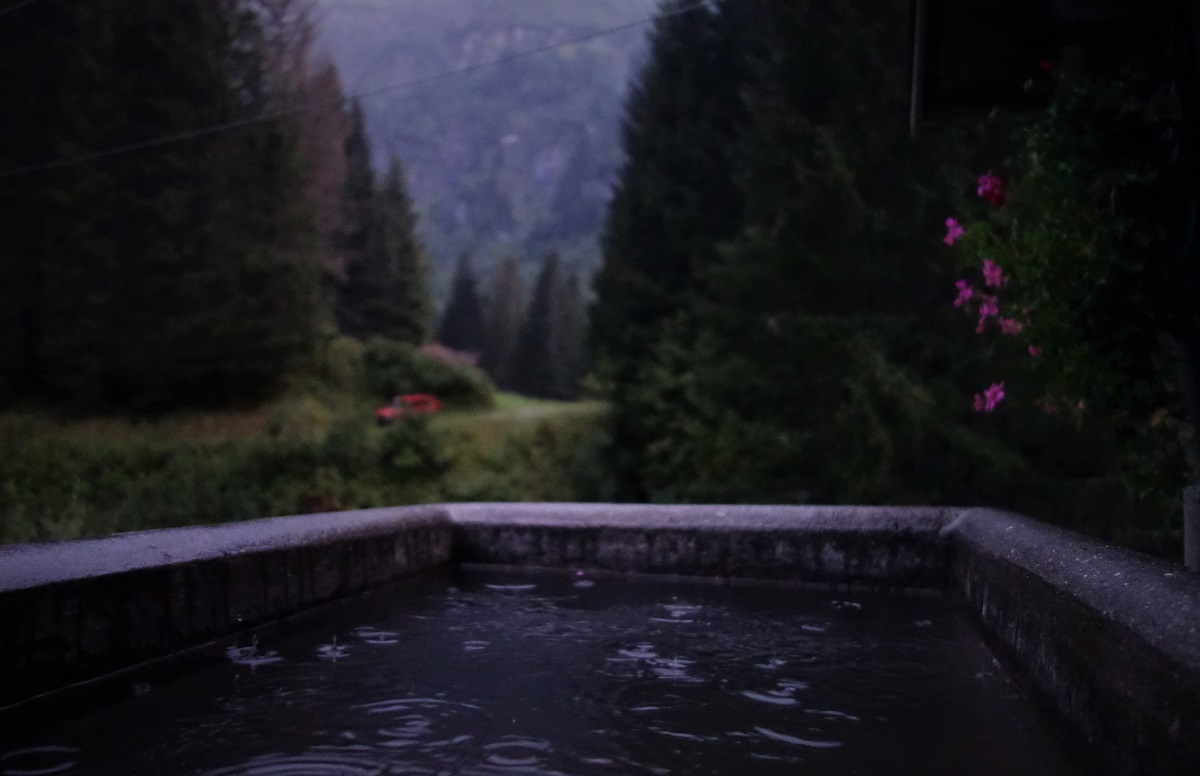
    Would sir prefer the en-suite with shower or bath?

    They’re also infinitely better than riding with a tent, sleeping bag, stove and food strapped to your bike. The Refuge des Fonts ticked all these boxes, everyone was super friendly, our bikes got locked away in the store shed and we got to stay warm and dry through the overnight rain and wake to blue skies and sunshine.
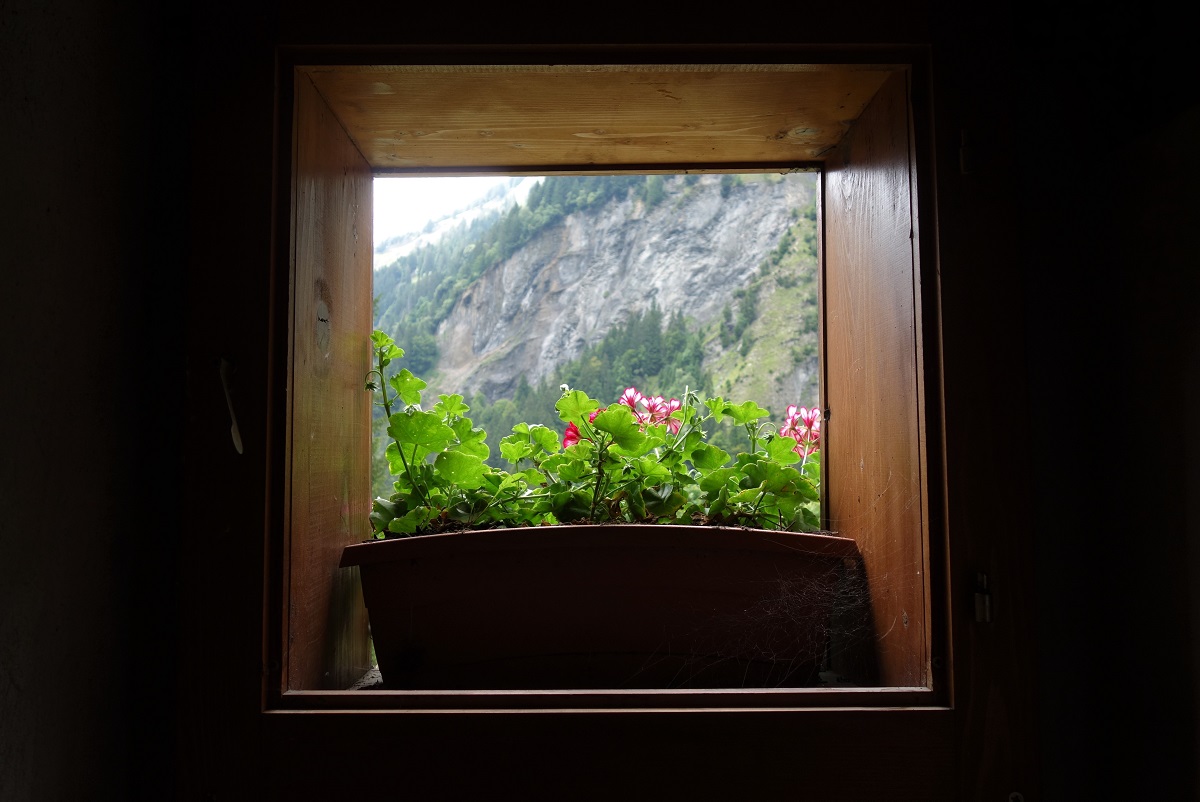
    Refuge des Fonts. Poos with Views.

    Day two started as it was intended to finish. Going downhill. Rolling out of the refuge grounds the trail is just about 4×4 truck friendly with some surprisingly well placed banks to make things more interesting. After a few kilometers of that we got to break off left into some sweet singletrack through the trees. In the morning. After a overnight rain storm.

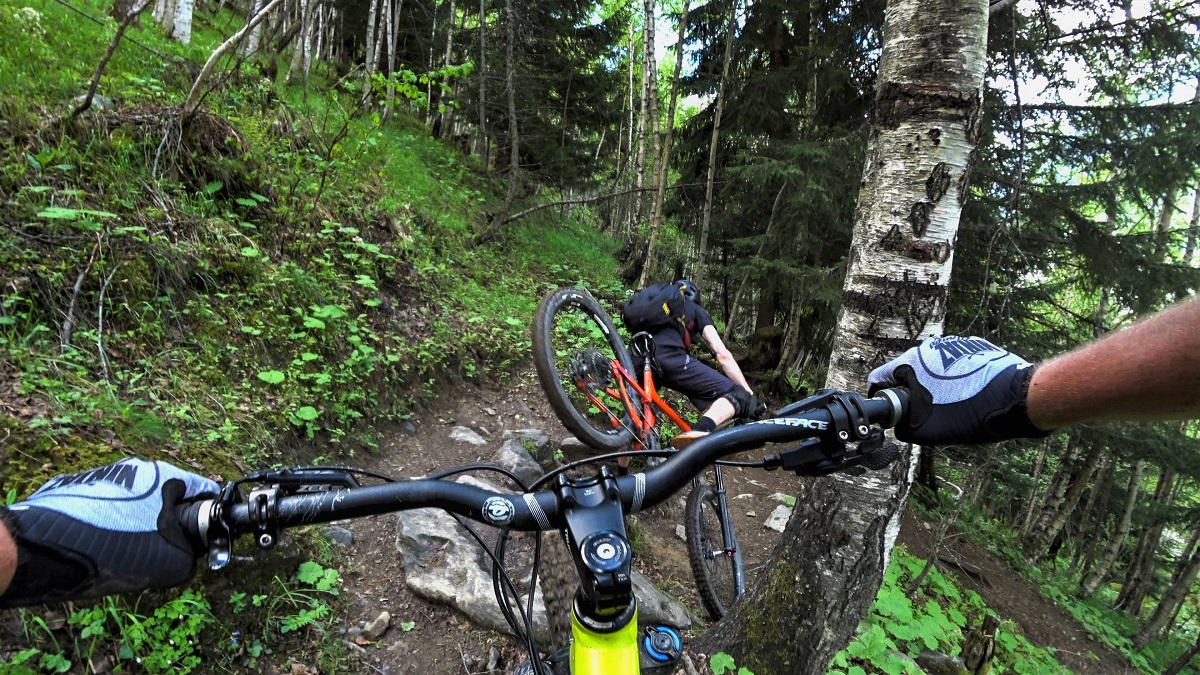
    Wet root gardens are a much better wake up shot than any cup of coffee I’ve ever had. We all survived somehow.
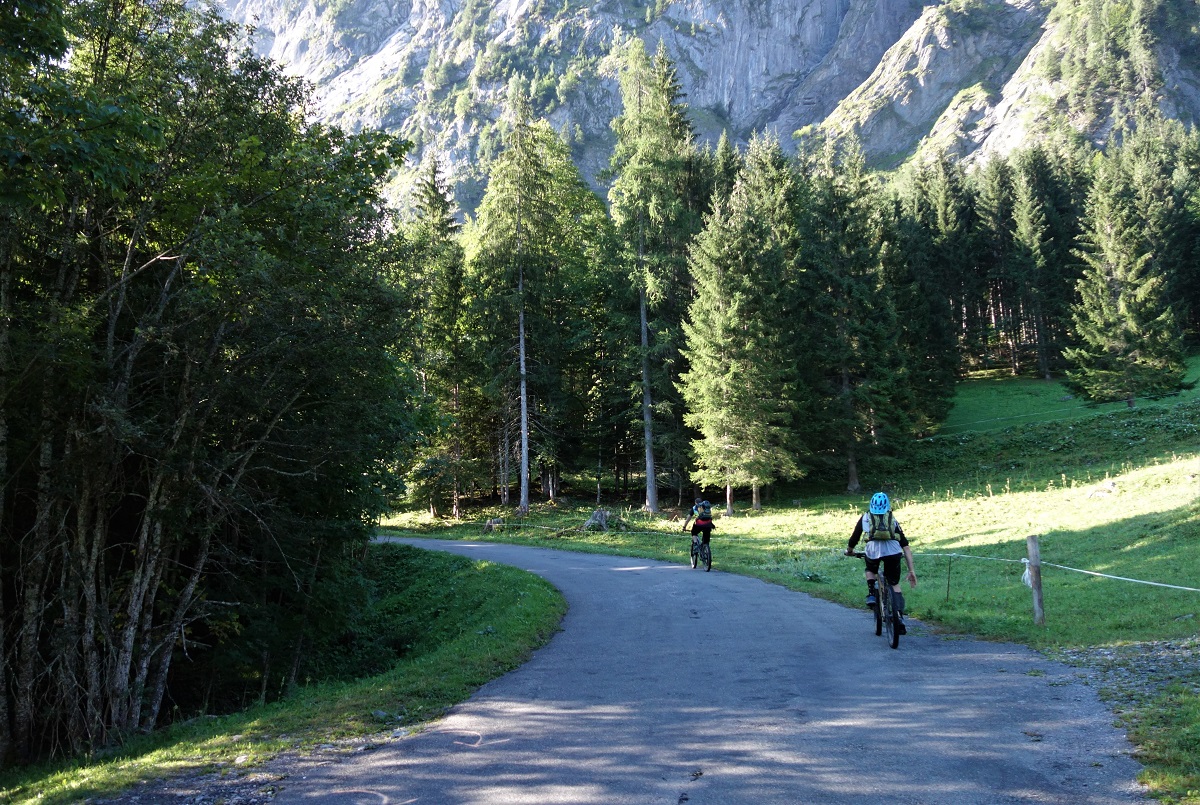
    It all seemed so easy at this point.

    Whilst the day would start and end descending, there was this middle bit where we would go uphill. It started easy enough with a nice meandering road climb up to Le Liggon. It then eased us into some rougher fireroad but still something you’d get a Rangerover up.

    A little steeper.

    A little narrower.

    A little rougher.
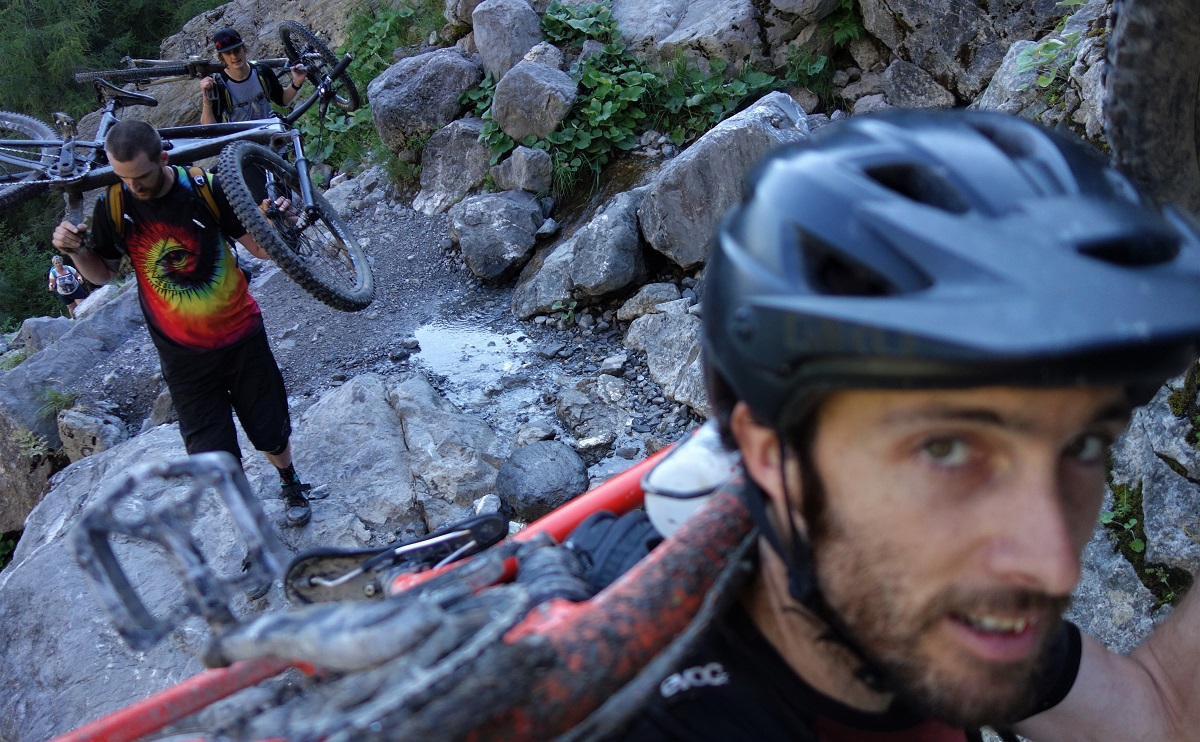
    Are we having fun yet?

    It’s like a good book or movie. The protagonist slowly gets deeper and deeper into trouble but, like the proverbial frog being slowly boiled, doesn’t notice it until they see the side salad getting prepared for their “tastes like chicken” flesh to be served with.

    The bikes went onto our backs and we kept going uphill.
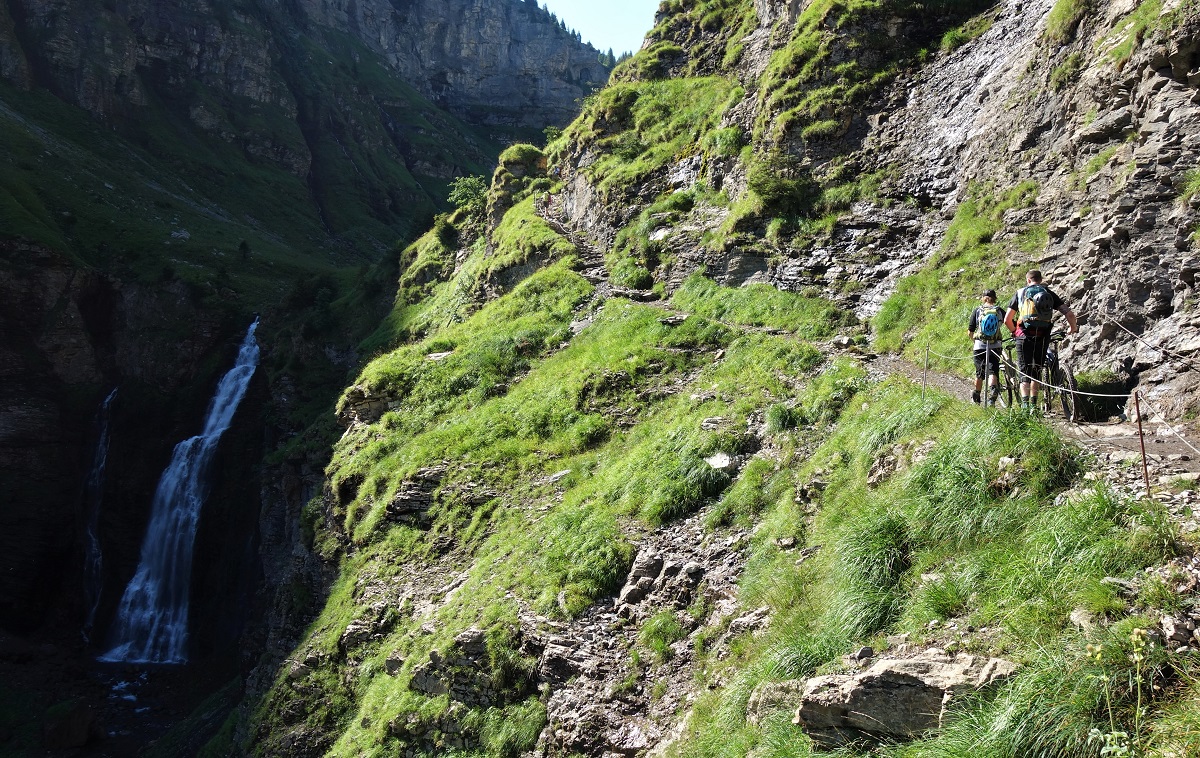
    Torrent de Sales. Good distraction that.

    Fortunately we had the distractions of the Torrent de Sales and its waterfalls as we went up.

    And, with good scenery comes the potential for good content, so we got to stop every so often, stretch out the shoulders, and take some photos. Woop.
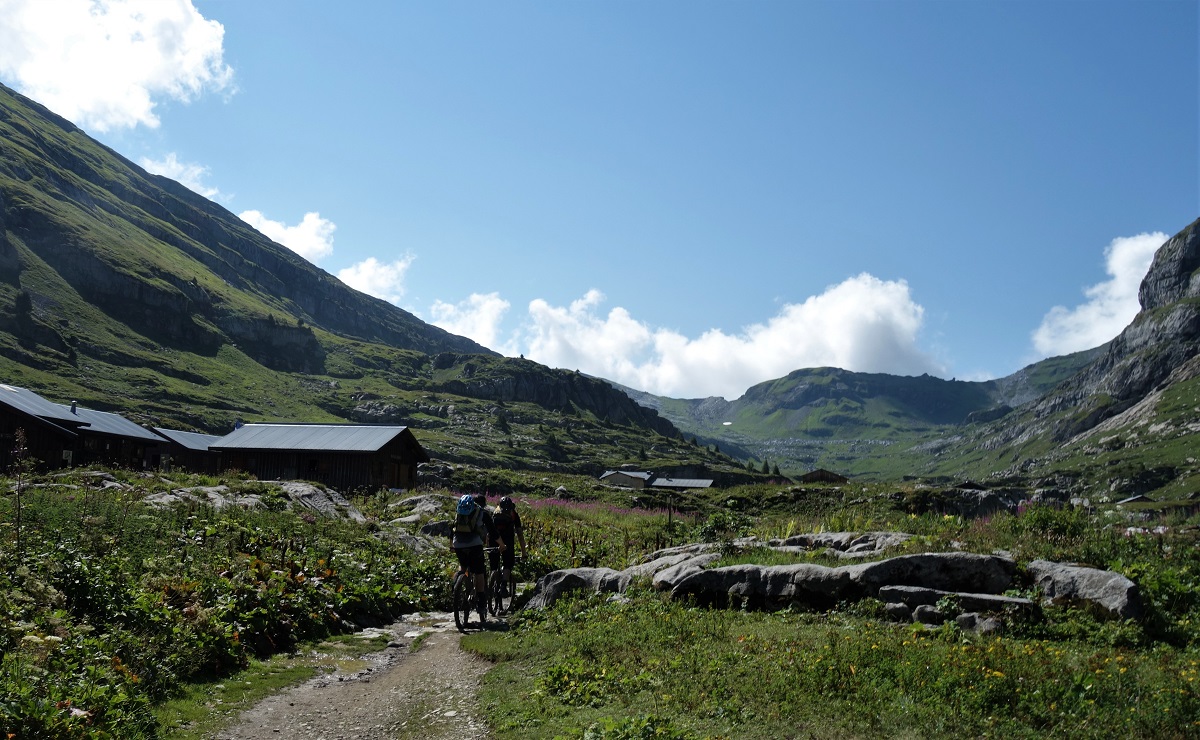
    Sometimes we even got to ride the bikes uphill.

    Eventually, and after a pretty brutal 800m and 2hr of climbing, we rolled into the Refuge des Sales. It didn’t take much convincing for us to stop for refreshments. I’m not sure it even took any discussion.
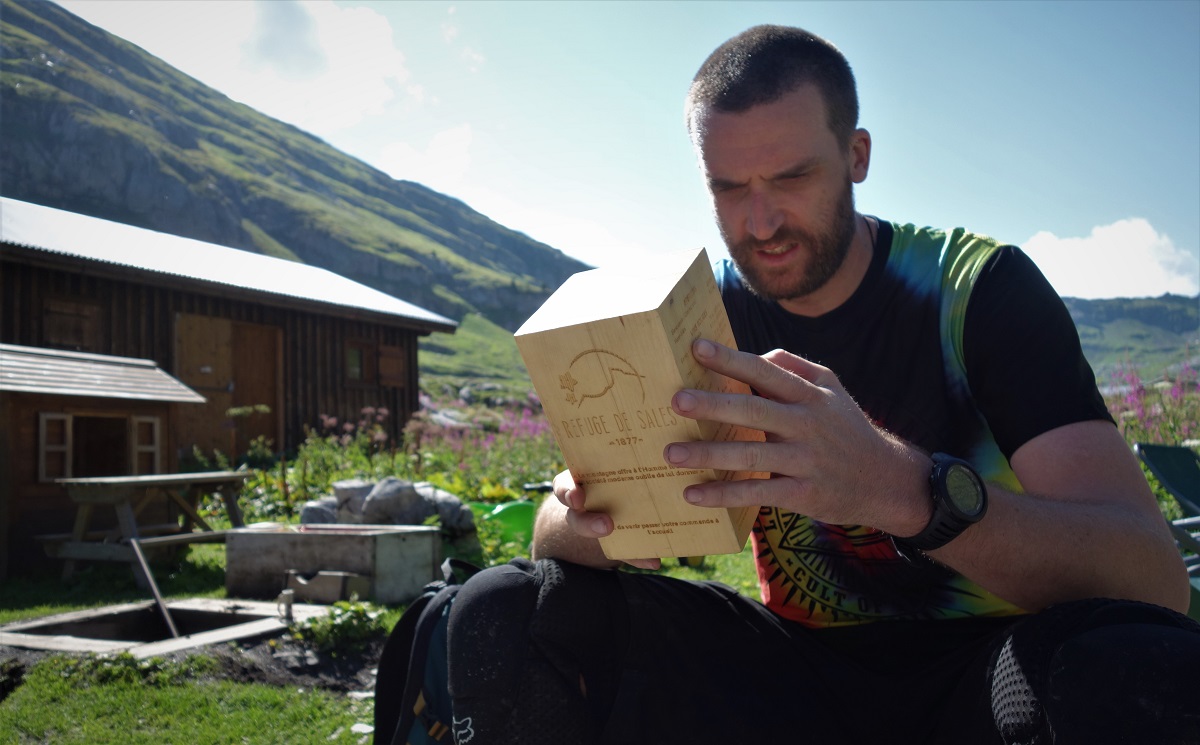
    If that menu's blowing away, you probably don't want to eat outside anyways. Refuge des Sales

    With only 500m of up left you’d think things would be looking good from here. You’d think, but you’d be wrong. We were entering the Desert de Plate, one of France’s largest limestone karsts and home to some impressively big fissures (and you thought it was an option on the Refuge des Sales’ menu….). When the nearby Flaine ski area opened in 1970’s skiers were quick to exploit the off piste potential of the desert du plate, and promptly started disappearing into stone crevasses covered by thin snow bridges. It also doesn’t make for particularly direct trails.
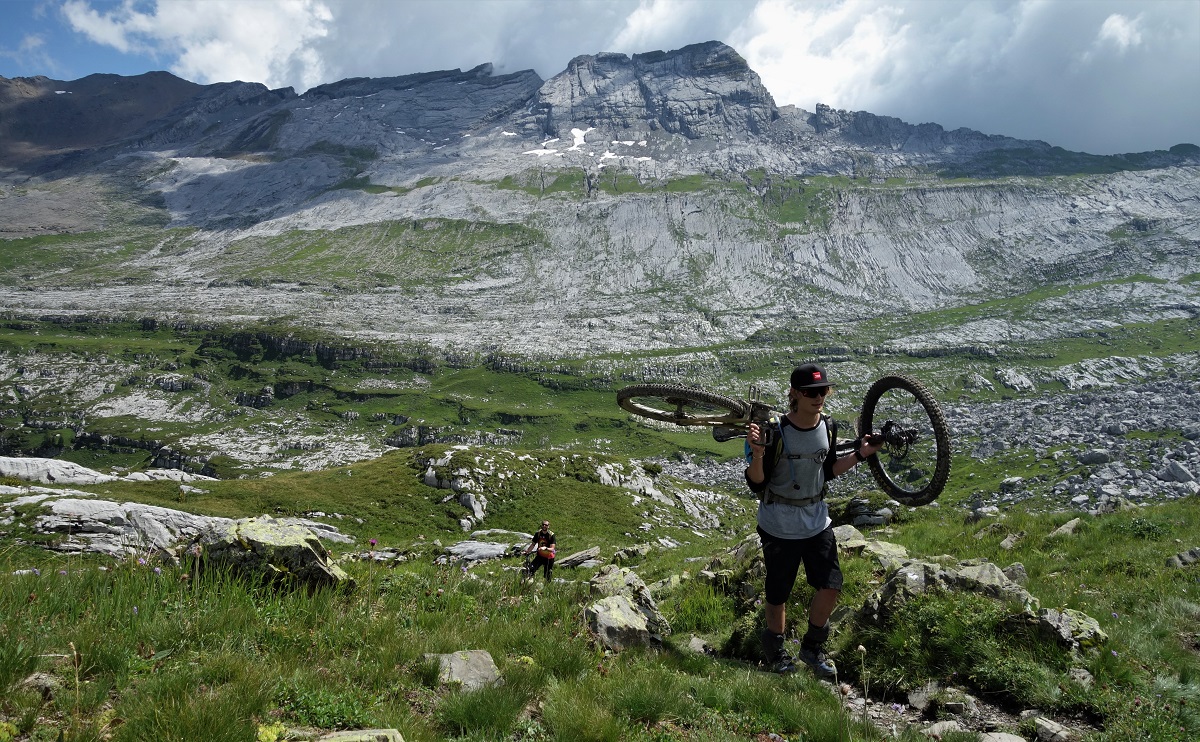
    Still going up.

    Never mind, every pedal stroke (or footstep), is another stride in the right direction. Eventually we reached the Col de la Portette and could start looking at the down rather than the up.

    All downhill from here Toby....

    Looking down had it’s advantages too, the trail from the top of the Col de la Portette isn’t really the kinda thing you just drop into. Not if you want to get beyond the first switchback at least. None of us rode the first switchback.
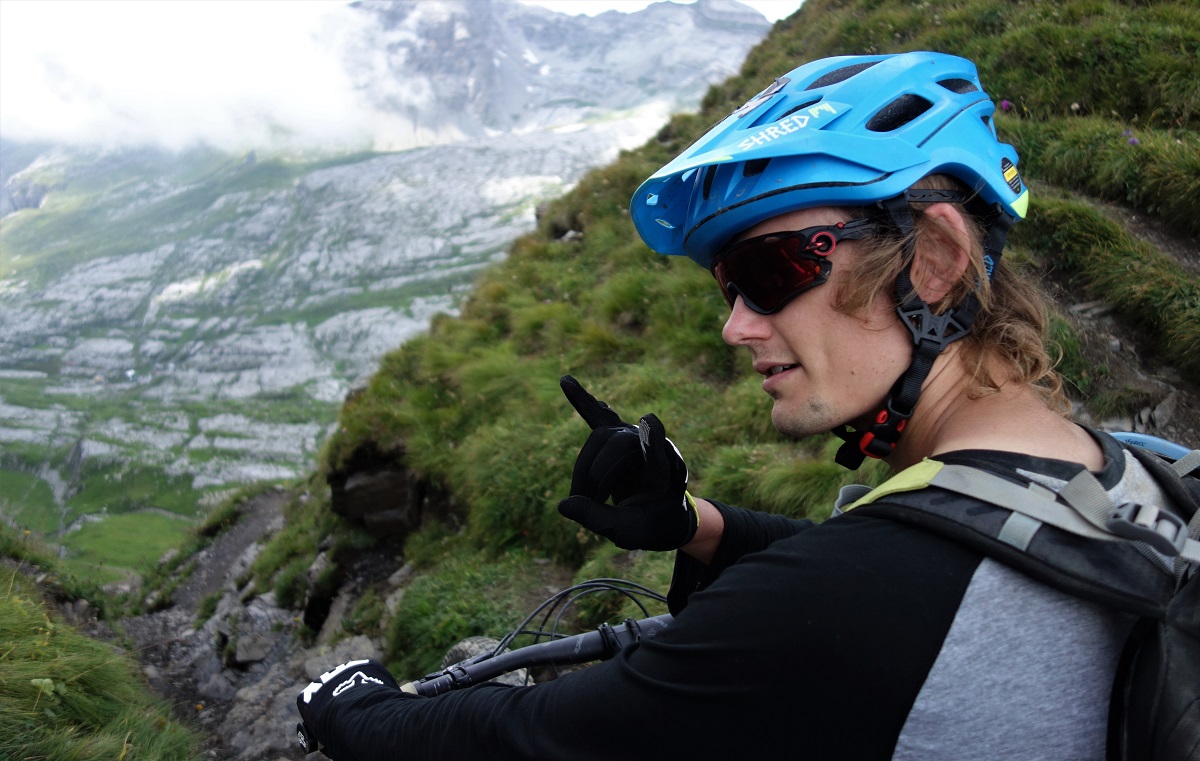
    Tim. Dropping. Or whatever the kids say these days.

    Nevermind, a couple switchbacks out of a near 1800m descent isn’t much to stress over. We continued down, and down, and down until we got to the Chalets de Plate. Where it started to spit with rain.
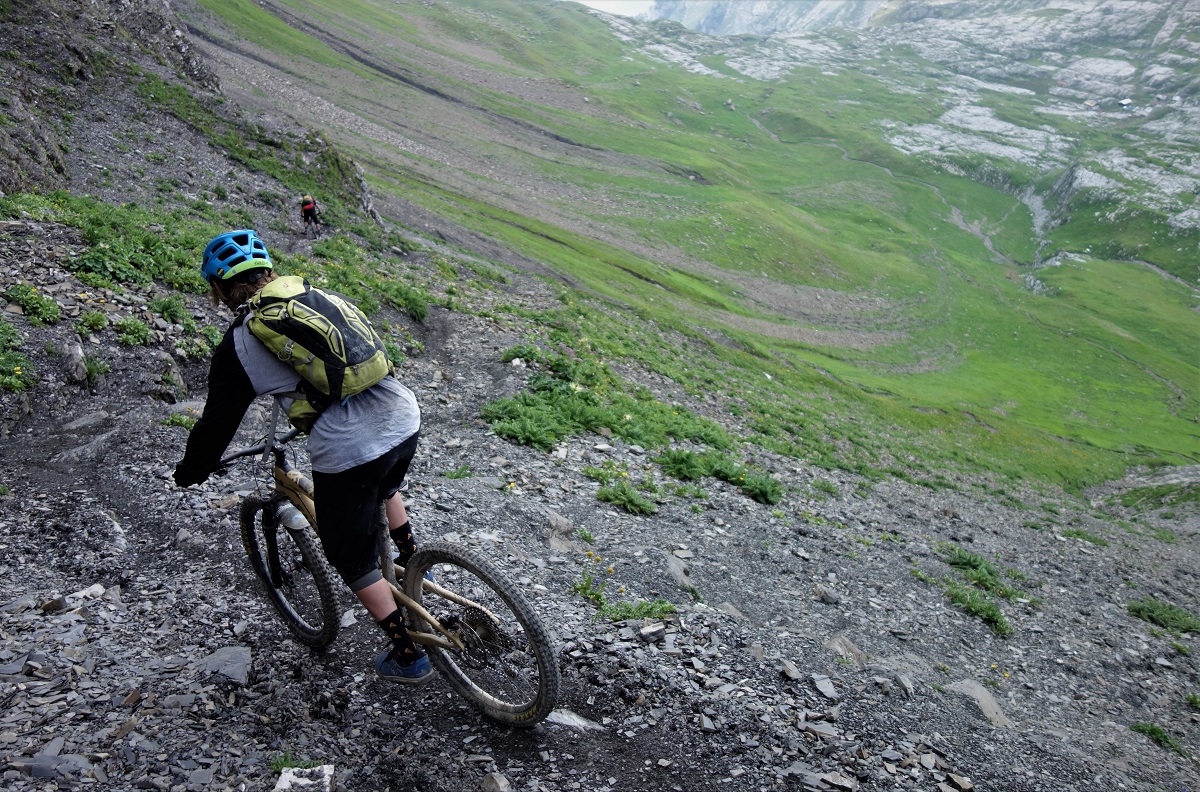
    Switchbacks we could deal with.

    Up till now the weather had been pretty nice and the forecast had promised that it would stay so.

    Unfortunately the weather hadn’t read that forecast.
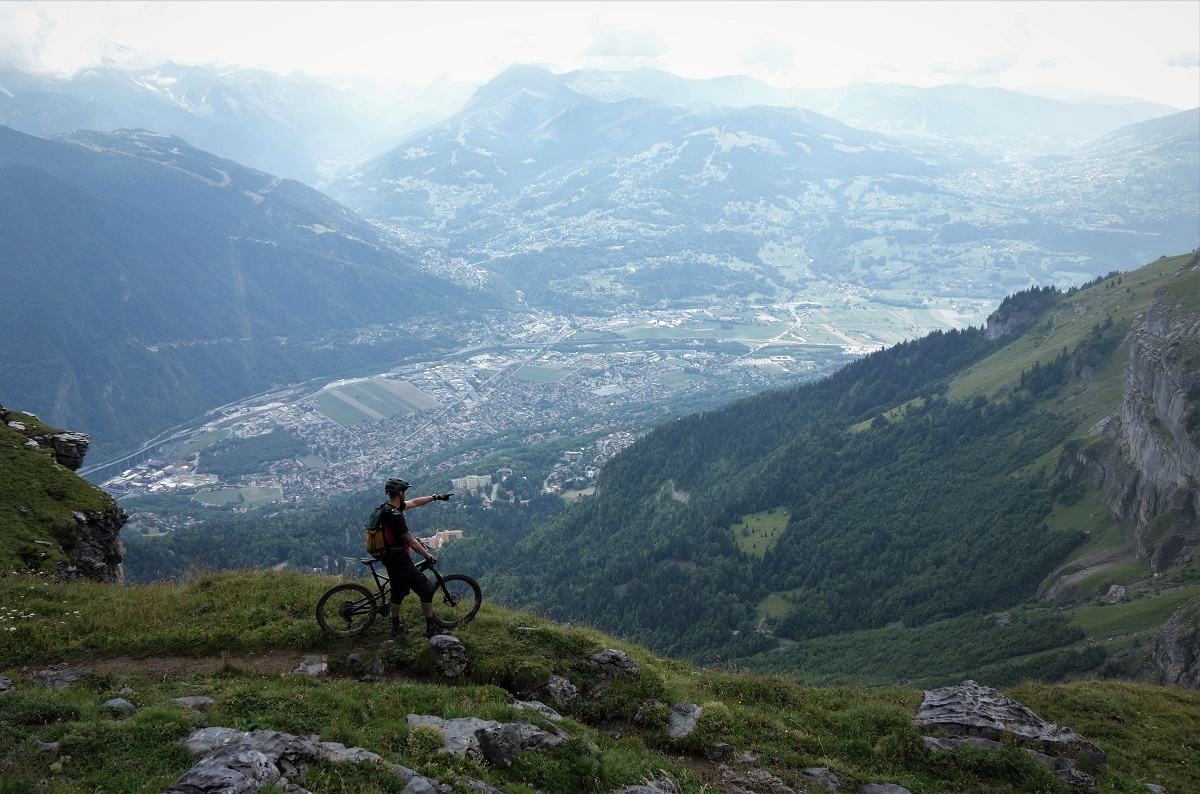
    Strong pointing game from Toby. Strong background game from Sallanches.

    Fortunately it seemed to be listening to those of us on the ground complaining and no sooner had it started raining it stopped and the ground began to dry again.

    Buoyed with the excitement of it now being downhill all the way to the bar we traversed the short plateau to the main event of the day, the passage through the cliffs of Les Egratz.
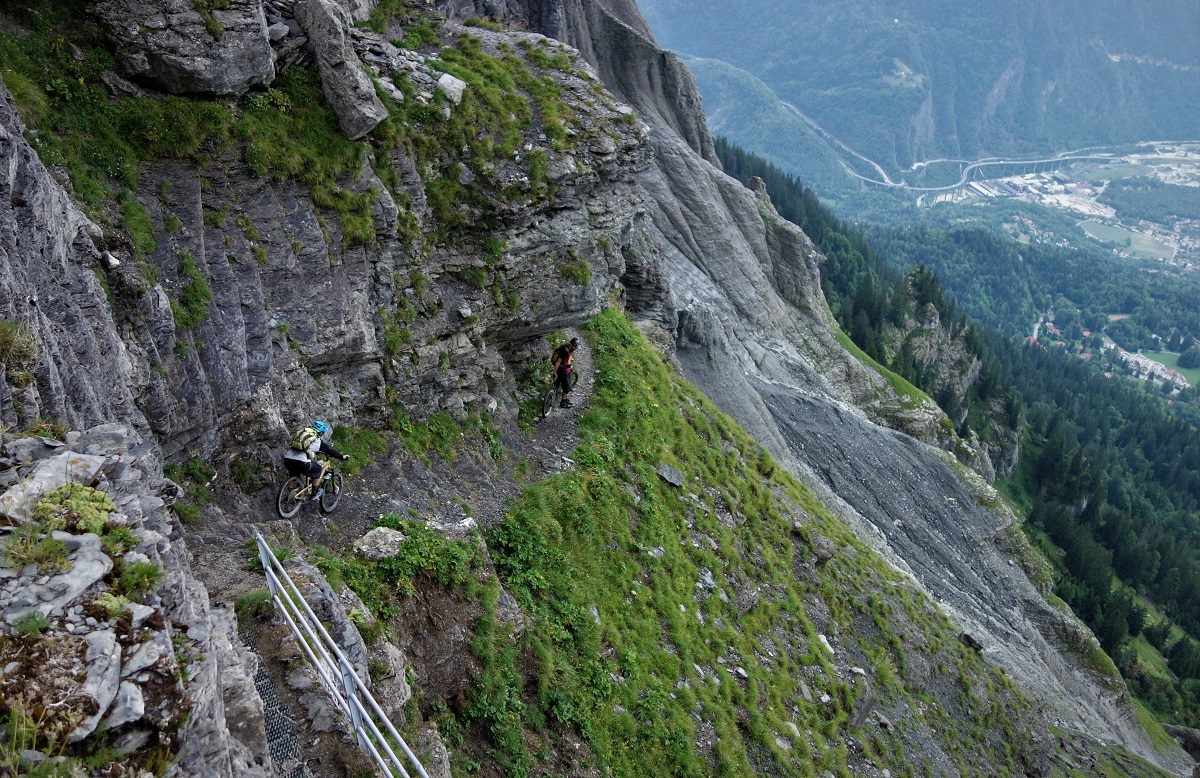
    TIm passaging as the trail gains interest.

    Good content, as implied at the start of this, needs to be a bit eye catching. What could be more eye catching than some big views of a big drop and a wee trail scratching it’s way through it?

    Cautiously, because you really didn’t want to fuck things up here, we started to descend….

    Now THIS is where it gets interesting.

    Then it started to rain again.

    Some geology deals well with the rain, a bit of moisture hardly dents the friction available. Squamish granite and Skye gabbro are two examples that come to mind. Limestone is not one of these materials. Limestone does not shrug off moisture and keep its mu. Limestone plus water equals a very unpleasant time for all. Limestone plus water plus death exposure equals not a massive amount of riding getting done.
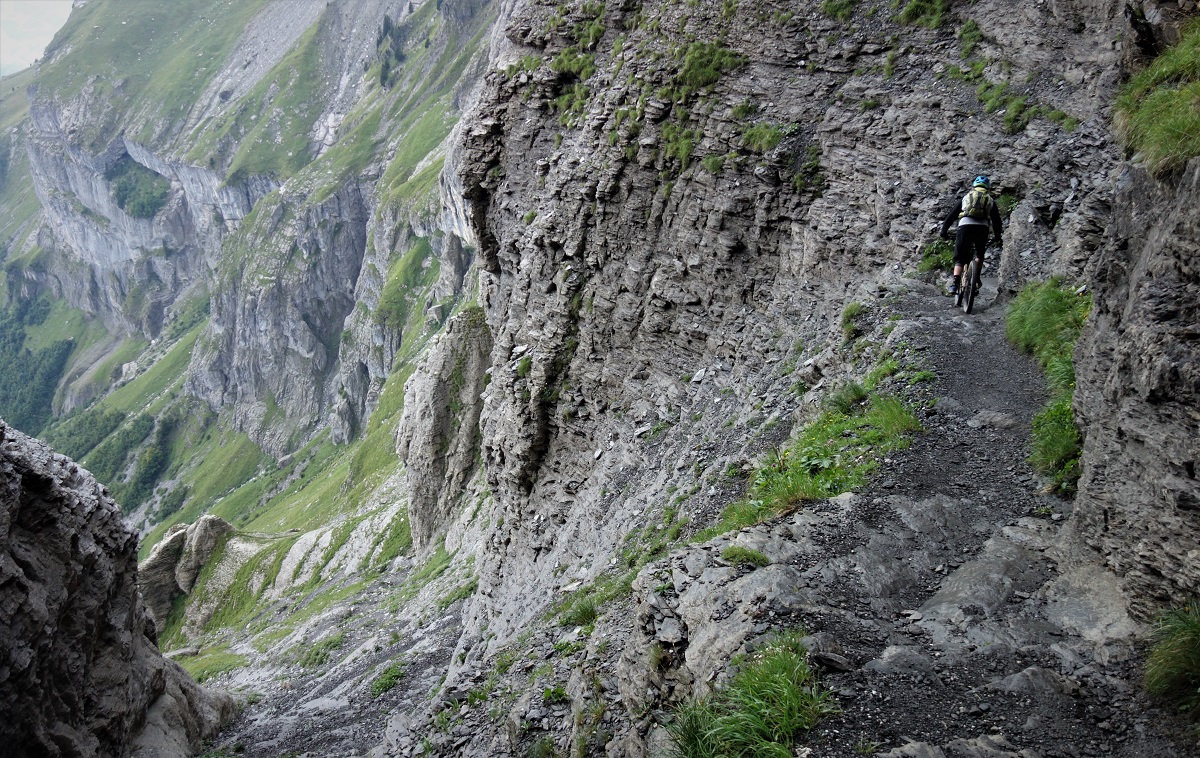
    Ask yourself. Do you want to be here when it starts to rain bigly?

    There was a wee bit of debate as to how best to proceed when instead the environment made the choice for us. The rain turned to a deluge, drops of water the size of smarties pummeled us from above and we found ourselves right back where we started this story.

    A loose, steep couloir is NOT the place to hang about in weather like this so, being all too aware of many events in the alps this season, we got down as fast as we could and hid under an overhang at the exit from the couloir.

    When obviously it stopped raining.
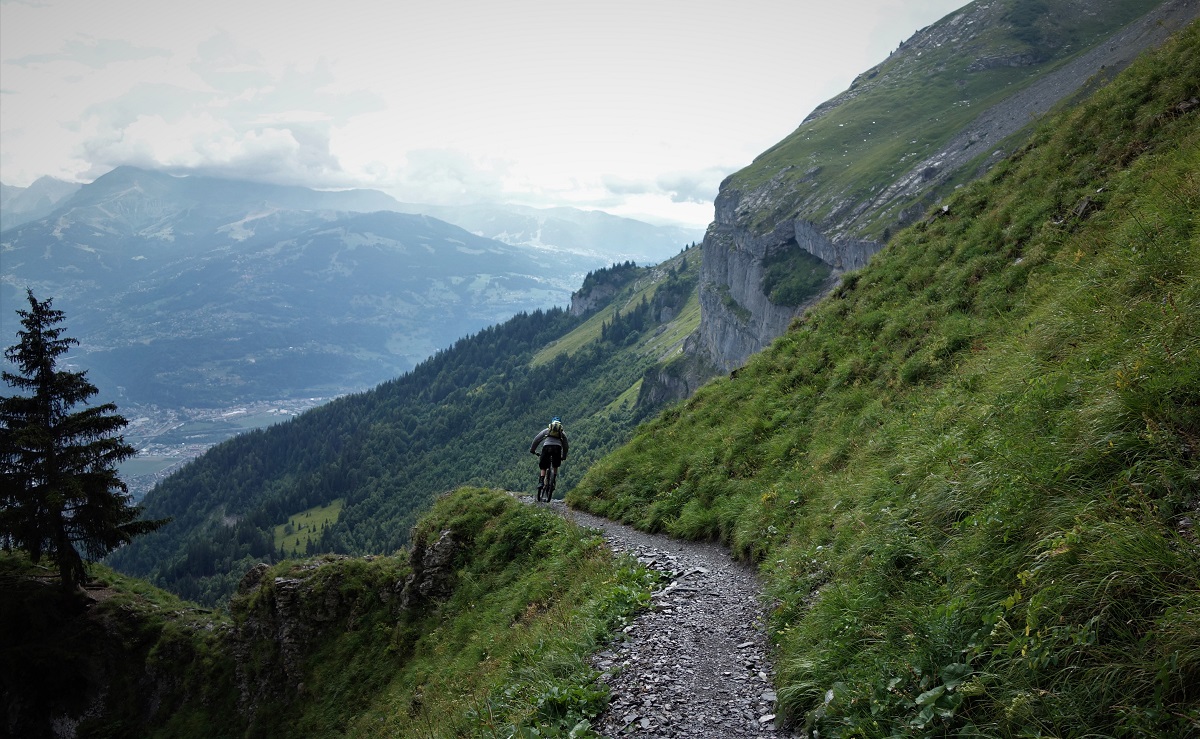
    Out of the frying pan, into a nice pool of cool soothing liquid. Things were much better once escaped from the couloir and weather.

    I’ll not lie. We were all a bit disappointed by this turn of events (the rain, not the stopping of the rain). Two days is a fairly long approach in bike terms for a descent. It’s about the journey not the destination and all that though. We’d already had a wheen of good riding, missing out on less than 100 meters of vert didn’t change that, nor did it change that we still had a little over a vertical kilometer to drop yet. Dry your eyes mate, get back on the bike and start having fun.

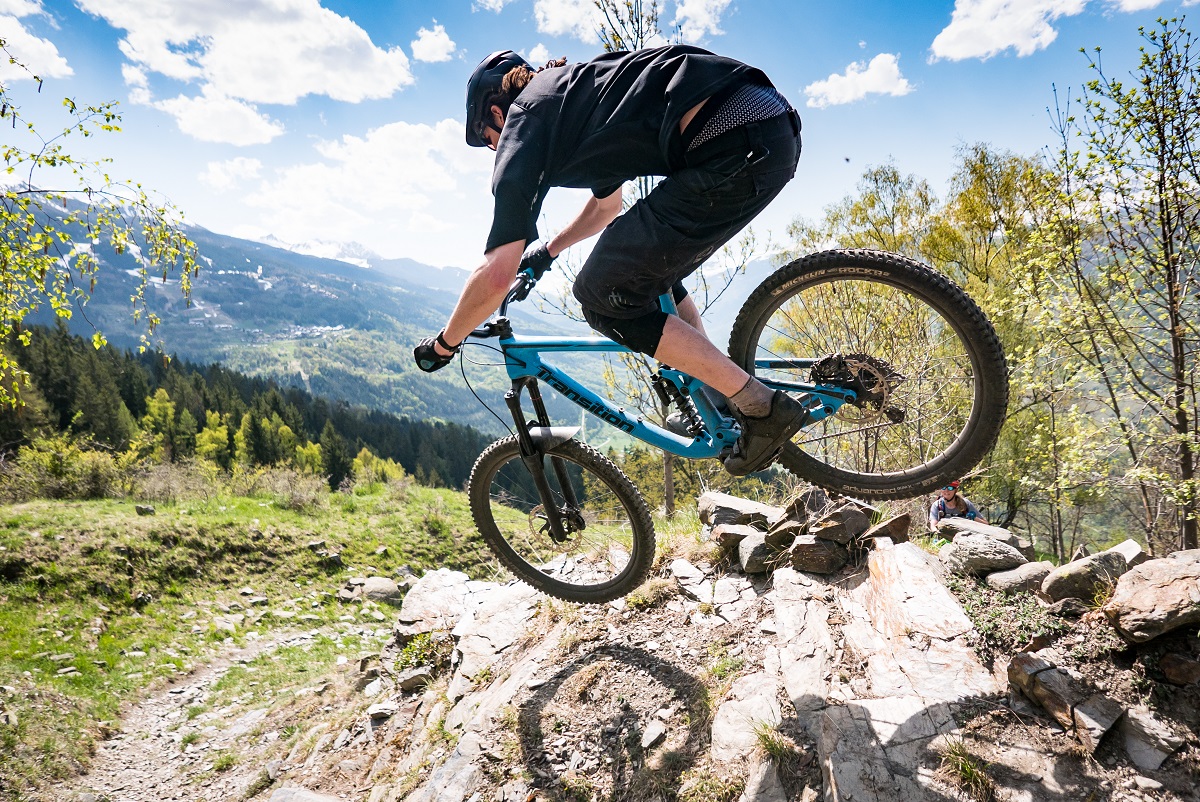
    Both riders in the air at the same time, on a natural trail. Rare as unicorn poo that. Rare trail too...

    From a story telling content perspective, I’d finish this post there, stepping out from the overhang, shot of three riders laughing and shrugging shoulders, then cuttying and manualling off into the sunset.

    From a real life perspective, we continued more sheepishly. There were a few navigational issues on the descent, it turns out that if only one of the members of the team has ridden the trail, and only once, and that once was part of a longer ride where he was not on an e-bike whilst the others were, and it was in the evening, and it was 4 months ago, his memory might not be perfect for each junction……we got there in the end, and it was worth the detours. A trail destined for another visit for sure.
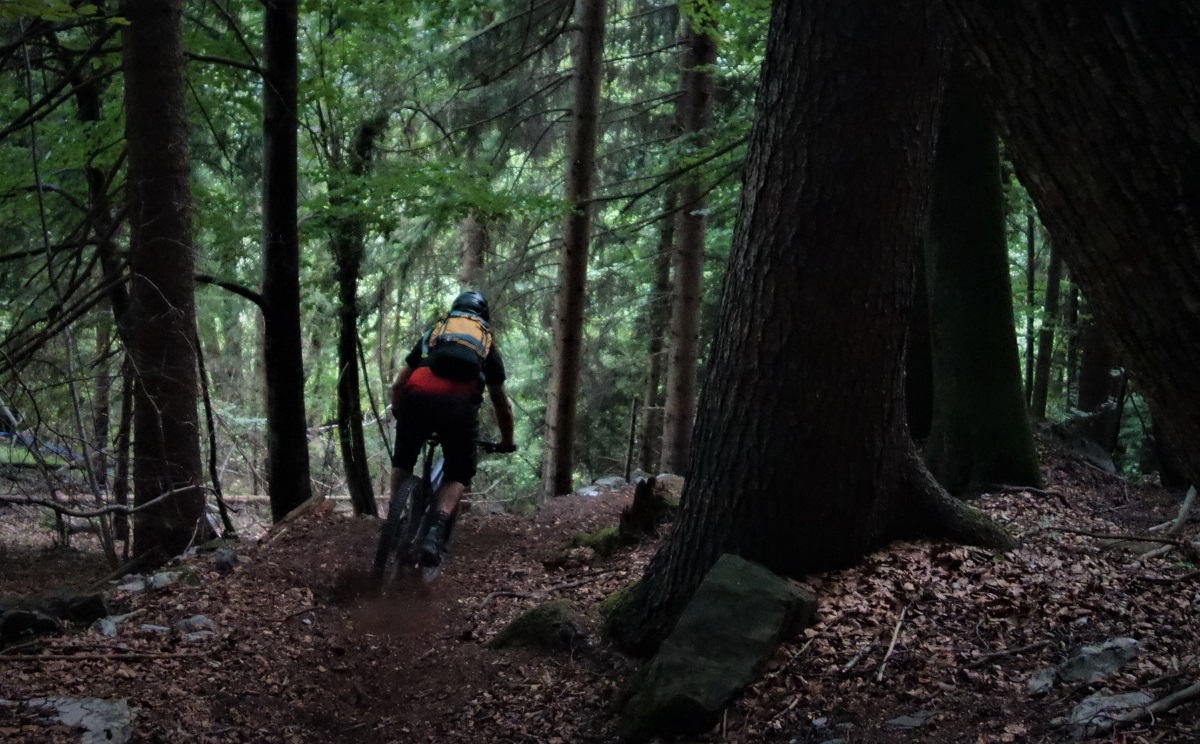
    That's some of your genuine loam there lad, no fakes, no imitations.

    We reached the bar, the traditional end point for all rides and start point for the creation of the story of the ride. As none of us had go-pros we skipped high fives and went straight to ordering beers. What did we learn? Nothing we didn’t know already*.
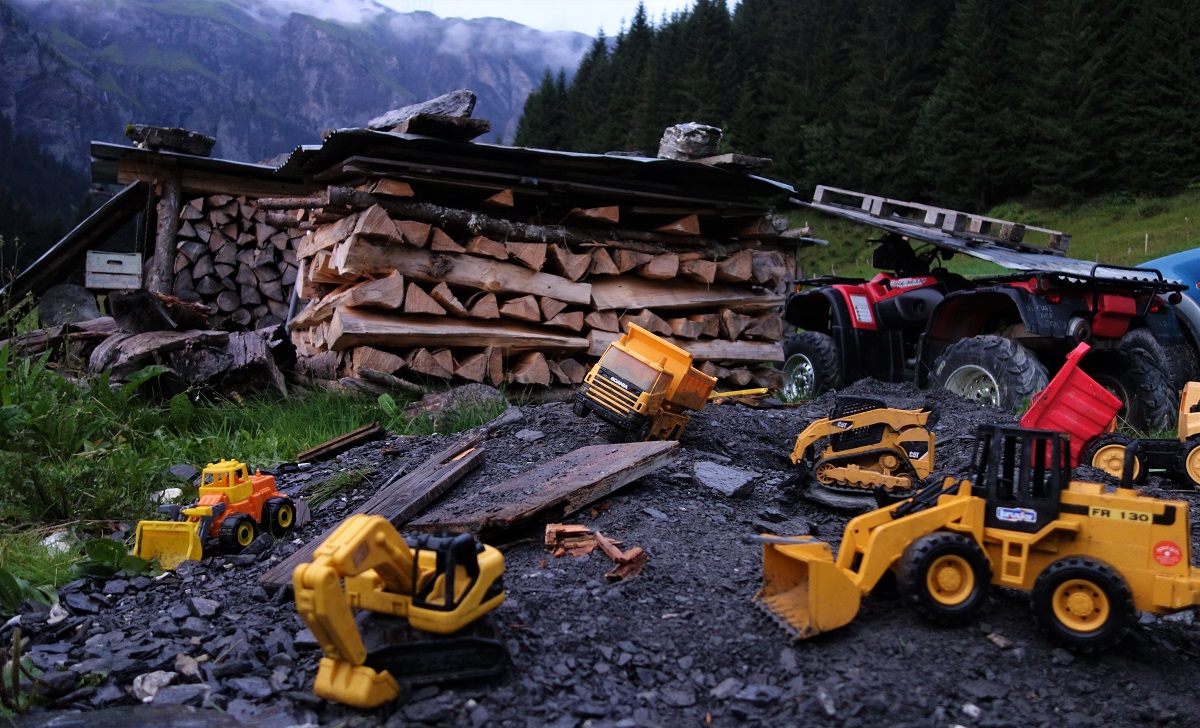
    Refuge des Fonts. It's not all fun and games, we found a hidden mine relying completely on child labour there too. Dark things happen in them thar hills.

    *An abrupt end for sure. I considered padding out the “living life in the moment” analogy even further, but there’s more than enough words in this already, and the irony about spending current time by writing of a past event as a parable to live in the moment is getting too much for me.

  • All the lifts.

    A journey of a thousand miles starts with a single step, a day on the lifts starts with a chilly uplift. deep innit.

    In 2013 Lorne and I tried to ride every lift on the Chamonix pass in a day. We failed because we didn’t really think it through first. You can read all about it on the blog here.

    In 2016 Lorne and I tried to ride every lift on the Chamonix pass in a day. We failed because we were a bit ambitious about how quick we’d move at the end of the day. You can read all about it on Pinkbike here.

    In 2018 Lorne and I tried to ride every lift on the Chamonix pass* in a day. We…..

    Photos were mostly taken with the mind, not the camera, so there's a ration on pictures of us riding the bikes. I'm using the ration carefully.

    Well, where would the suspense be if you knew the outcome was by the 3rd paragraph? OK, it would be in the well written prose where it’s a literary technique called prolepsis, but here you’re lucky if I dinnay stray into Scots too often, so you can just have good old fashioned chronological prose instead. (play literary technique bingo HERE with the hand guide to words you’ll never remember)

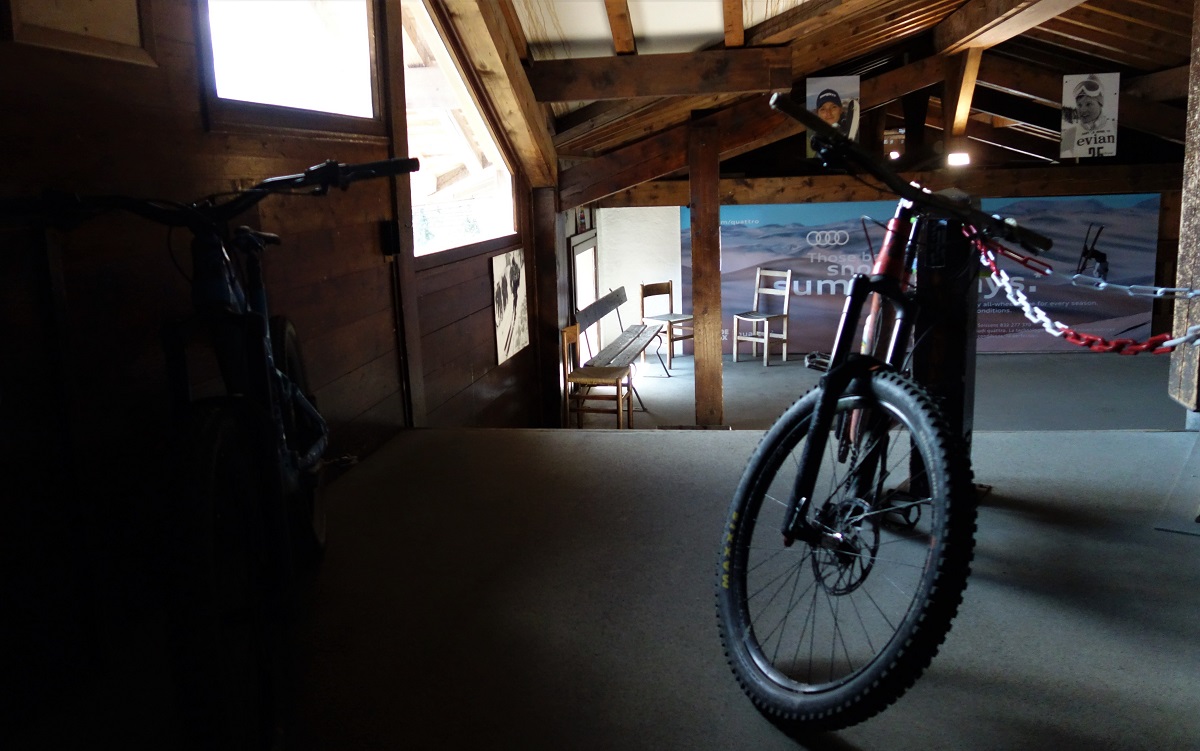
    Number 1 of a series I call "photos from, in or of lifts". Kevin Carter is not amused.

    In past attempts there were pages of maps and detailed spreadsheets of timings. For this go it was as much as either of us could do to find a date neither of us were working. Date found, we met for the 0754 train outta Chamonix with a scribbled list of lift closure times and worked it out on the way.

    On the way from Vallorcine to Le Tour. Chamonix. Does good backdrop.

    Pedal up to Le Tour, wait for the lifts to open, go up the lifts, ride round to the Vallorcine DH. Its been well hammered by some recent storms, the “black” grading probably needs shaded in even harder. It’s quite the warm up lap.

    There was some good light today. bro.

    Up the Vallorcine gondola, pedal up to the Col Posettes, head down through the bike park. It’s the July – August bike ban so the more interesting ways down are all out of bounds. Obviously, being the smoothest and easiest trail of the day, I get a puncture on the green track.

    Number 2 of the series. Prarion. You're going to see a lot of these photos so you'd better get used to it.

    Grands Montets, Flegere and Brevent are all closed to bikes this summer (well, Brevent isn’t, but you can only go up from 1615 and there’s just 1 way down, so we’re treating it as closed) so it’s a fast pedal through the valley to Les Houches and Prarion.

    This is the new entrance to the Les Houches DH track. I like the backdrop...

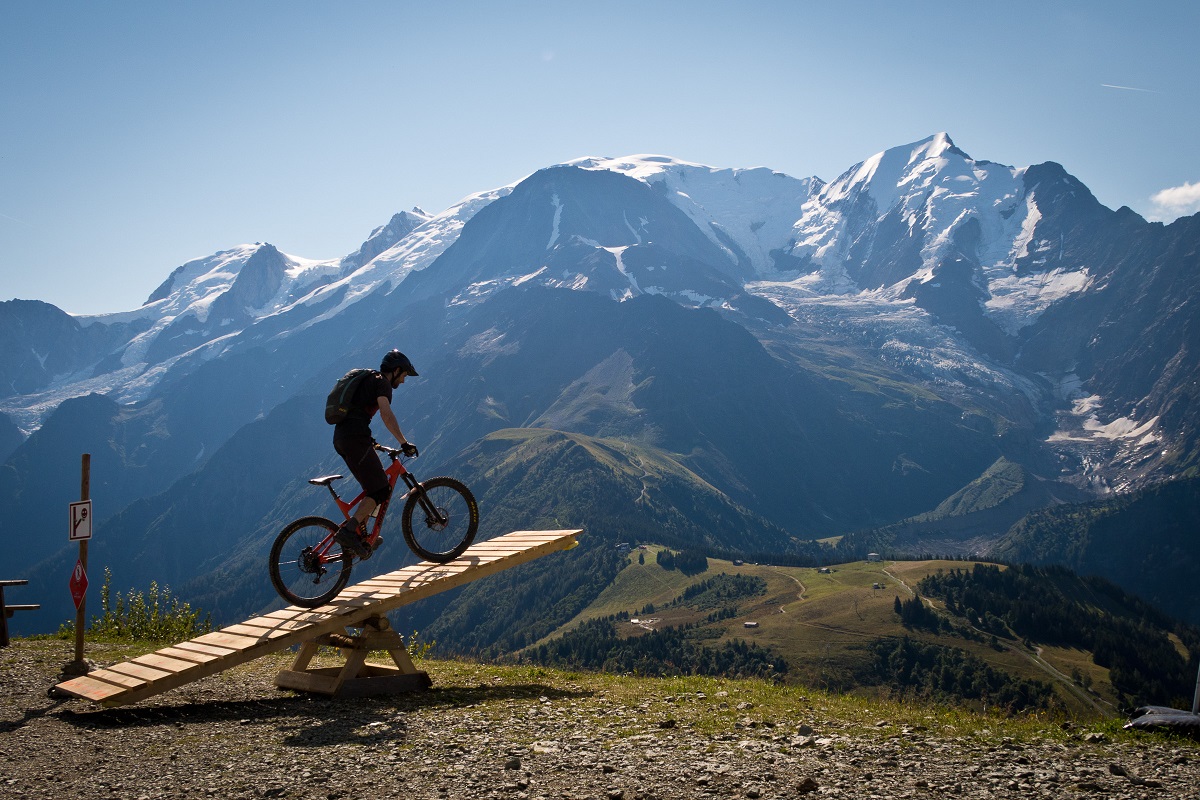
    Prarion lift, Prarion DH trail. There’s a new see-saw to enter the track (we don’t like see-saws) the trails running pretty good, and the new finish spits you out just above the Bellevue lift.

    Number 7 in the series. What, you think I've jumped a few? Interesting, you think in THAT time order. Humans eh.

    Puncture excepted, all had gone smoothly up to now. There was a gondola sitting ready to leave. We weren’t allowed on it and had to wait for the next lift. I bought a baguette. You make the most of downtime on days like these.

    Number 3 of the series. Bellevue lift before the hundreds of pedestrians got added.

    There’s a grand yet little known trail starting a few hundred meter down from the Bellevue lift that drops you down towards La Chapiot. We took this trail for those reasons, it really is grand and being little known it wasn’t hoaching. It also handily puts you onto the trail round to Pont des Places and Le Champel and cuts out a wheen of road and climbing on the way to Les Contamines.

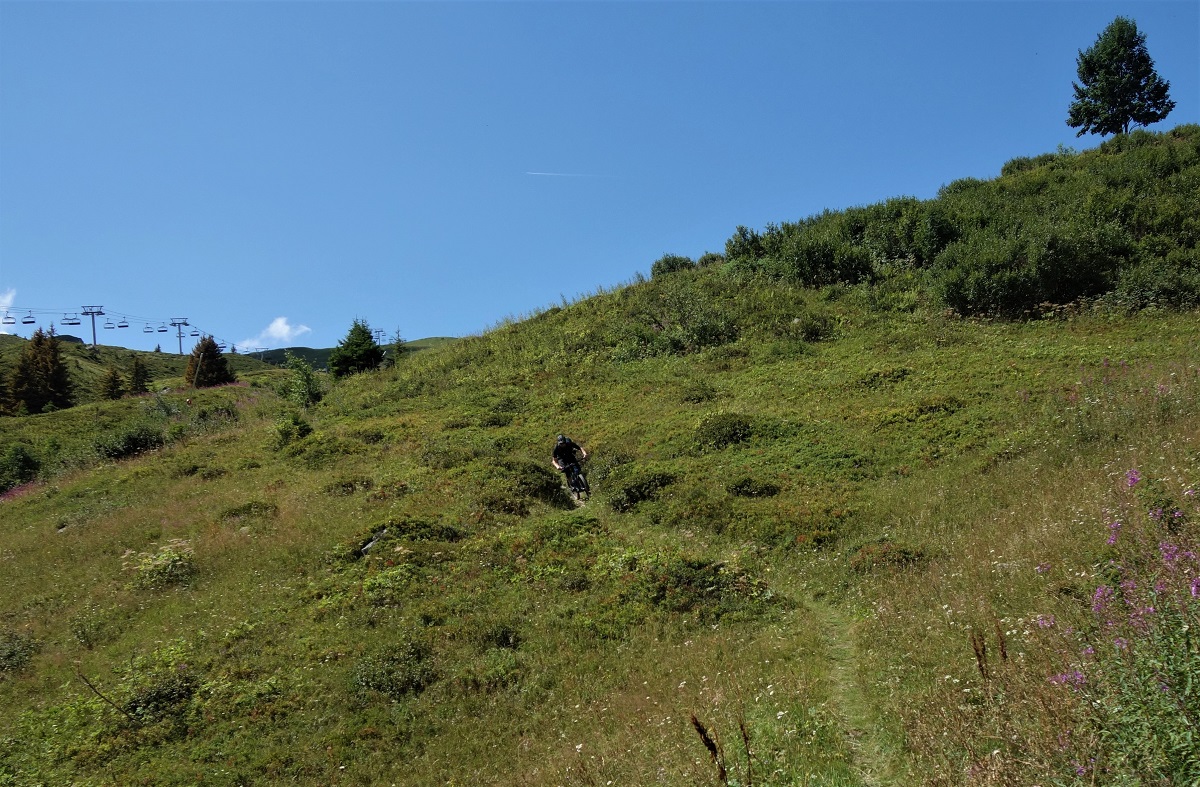
    One of those rationed riding photos, off the back of Col du Voza and en route to Les Contamines.

    A handy feature of many of the lifts outside the Chamonix valley is they either close for lunch or run on 30 minute rotations. Or both. The Les Contamines lift closes from 1230 to 1345. With some smugness we were on the lift by 1200. As the next lift was also closed ’til 1345 we chose to do a bigger lap off the top. Well worth the detour. And we could stop and take some photos as we went too. Bonus.

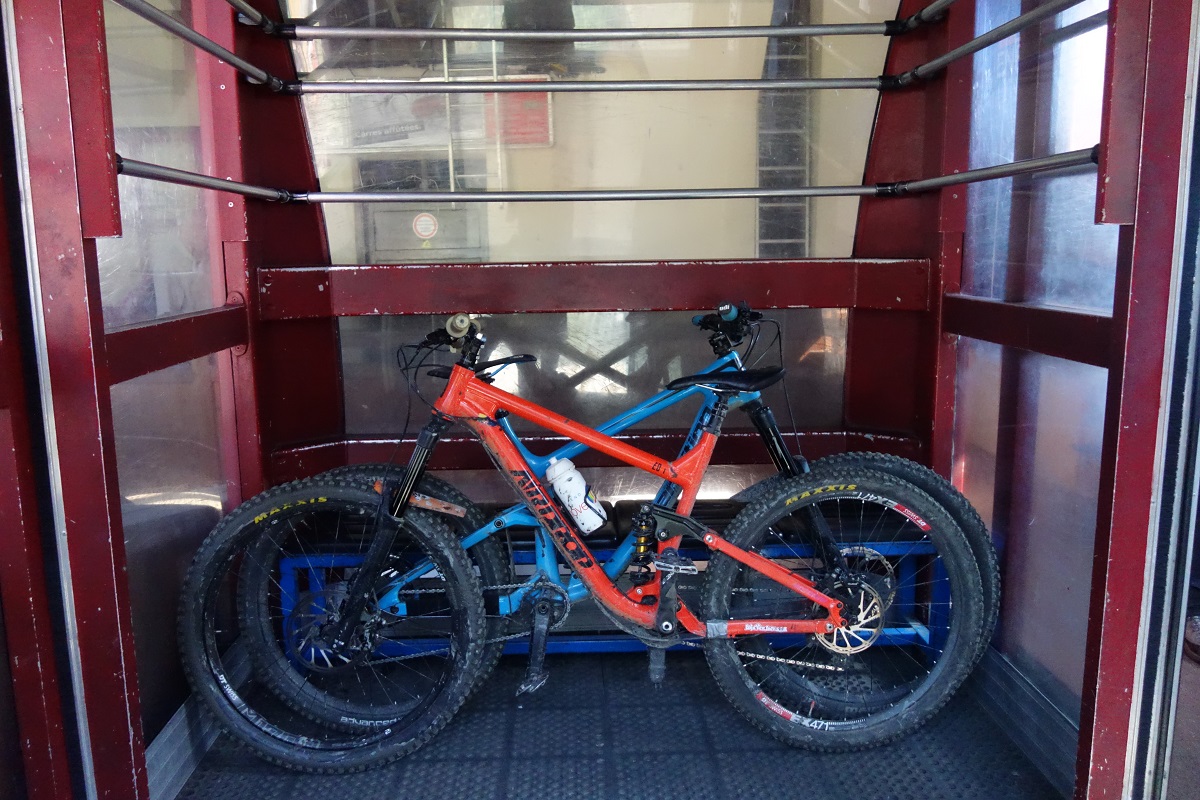
    Todays most terrifying lift award goes to......Les Contamines. There's not much holding your bike on there. I had to hold mine into the rails for the ride.

    Bollocks. Having sauntered up to the St Gervais lift well before its 1345 opening we get blocked out of the queue for the second stage and made to wait 15 mins for the next rotation. Will we make the last lift in time? Will we rue those missing 15 mins? Will anywhere have ice cream in Megeve? All these questions and more remain to be answered.

    There's some right good trails off the top of Les Contamines down towards the roman road past Notre Dam de la Gorge. You should try them!

    From the top of St Gervais we’re aiming for the Jaillet lift in Megeve, and strike a fairly direct line towards it down the hill. The trails about here aren’t so easy to find as over in Chamonix, you don’t get as many folks exploring this far. If you can bring yourself to make the effort, then joining the dots between Les Mandarines Restaurant, Bornand, Darbelet and Les Choseaux is well worth your effort, even if forestry work and storms have damaged or destroyed some sections of the trail. About a third of the way down we score the first crash of the day too, with Lorne hitting the deck hard. An enduro crash though, he’s up and riding as soon as he can see the bike is fine.

    The shot of the day, but where and when is it taken....?

    At the Jaillet lift we find Lorne is a little less fine, but it’s only blood and the body had something like 5 litres of the stuff so he can afford to waste some of it. Jaillet lift is also home to some fine trails, a veritable maze criss crosses its way through the forest below the lift. The best way to learn it is to get a day pass and keep trying different trails. We didn’t have time for that, so Lorne had to trust I could remember where I went in races past.

    No photos from around Jaillet, so here's another from the start of our trail at the top of Col du Voza.

    It seemed to work, 45 mins after getting off the St Gervais lift we were at the Rochebrune lift and ready to rock. Except the Rochebrune wasn’t running for another 15 mins. That answers that question.

    Number 4. Rochebrune lift. The first lift installed in the alps intended for skiers not tourist don't cha know.

    Are there any worthwhile trails to ride off the Rochebrune lift? So far the answer there is no, but I’ve not tried every trail, so mibbies there’s something. Eitherways, it’s on the lift pass, takes bikes, and the 4×4 trails help get us over to the next lift with a minimum of pedaling, so it gets taken and ridden.

    Oddly, given the pace we were having to keep, no riding shots from here either, so it's #5 in the lift station series instead. Mont d'Arbois, Megeve.

    Petite Fontaine. This is more like it. We’re running seriously tight here to get to the next lift by 1630, so there’s no photos only memories (and they don’t convert to 1’s and 0’s well yet), but this lift is way more what folks have in mind when they think of undiscovered alpine chairlifts. Big rolling terrain and sweet rooty singletrack. Over all to soon but with the schedule we’re on, probably soon enough. Or maybe not, we get to our next checkpoint with so much time to spare we can buy ice creams. Another question answered.

    Mmm. Ice cream. Well, sugary sorbet would be more accurate, but you can only work with what the cafe stocks.

    Mont d’Arbois. Fourth of the poorly named Megeve trilogy, the lift brings you back up to more or less the top of the St Gervais lift. That means it brings you up to the top of the “Wizz” flow trail. In a region of the alps not known for getting flow trails right, this is a wee gem of a trail that could have been lifted straight out of Whistler. Early season Whistler before the braking bumps form up at that. Not sure about the name though.

    A wee tease of earlier in the day, that same slower lap off Les Contamines where we could take photos. Tempting you over there at all?

    Wizz trail ridden, we’re still 620m above and 16 mins before the last tramway, our last lift, of the day. Whilst it would be nice to do those 620m on some quality singletrack that’s not an option in this area, and even the average singletrack is a bit time consuming, so we crack on with a bit of road riding and cut through finding.

    Number 6 in the series, Bellevue top station (next to the Tramway station, so kinda works chronoillogically) I call this piece "self portrait of a bike and its rider"

    Two minutes early is as good as 10. Two minutes is enough to buy a can of juice whilst you wait for the Tramway car to appear over the horizon. You learn to make the most of downtime on days like these.

    Because when you've already been out of the house for 10 hours, it makes perfect sense to add another few hundred meters of up. Lorne on the way up to Col Mont Lachat.

    Arriving at the bike high point of the tramway, Bellevue, it sort of dawns on us that we’ve actually managed to get round all of the lifts. We’re both a bit tired and the cumulative wear and tear of the day is showing. The sensible choice here would be to take the classic GR5 trail down as a victory lap…..but somehow that doesn’t seem quite the fitting way to end. No, to celebrate we decide that we’ve not done enough today and the perfect way down would be to drag our battered bikes and bodies up towards the Col Mont Lachat and ride one of the most technical and consequential trails in the valley.

    Arandellys descent. There's quite a lot of it like this.

    I’m not sure I could truthfully say the Arandellys descent is the most suitable trail to end this day on, but I guess there were a few parallels to the rest of the ride. You need a certain amount of ambition, confidence and luck to ride it clean. Neither of us rode it clean, but we were both above our average for getting through each section. Amazing what a bit of success does for the riding confidence.

    Arandellys. Don't fall right. Or left, 'cos you'll just bounce off the wall and go right.

    Another convenient coincidence of this trail, it ends at a pub. So did our ride**

    Boom. 5 years after first attempt, and about 123km riding and 2000m climbing later. We get to the pub. Cheers.

    *Some caveats. These are all the lifts on the Chamonix Mont Blanc Unlimited annual pass that you are allowed to take a bike on during the bike ban months of July and August. Outwith these months there are more choices in the Chamonix Valley, but then most of the lifts outside the valley are closed. Brevent is the complicated one as after a few years of being closed to bikes in July and August has no opened to bikes, but only after 1615 and only to ride the road down. So we missed it out.

    ** Well, only figuratively. We then rode home after a couple pints (err, don’t drink and ride kids). As I live in a ground level apartment and Lorne a 3rd floor flat then I assume this is why my strava gives 9819m of descent and Lornes’ 9996m. A fair bit either way. Lorne worked out the numbers on the ride without the lifts and train. 123.4km, 2070m climbing, 9996m descending. Up for it?

    Relive ‘Every lift August 2018’

  • Milestones

    Bitta Gaston in a Sheffield / Cham mix.

    Summer solstice, The longest day, shortest night and a time for reflecting on being half way through the tropical year and that it’s all downhill from here.

    More, my bike is 1 today. Happy birthday bike.

    Another fine morning on my way to ride my bike somewhere interesting.

    Whilst we’re finding arbitrary dates, the blog is now just over 6 years old. Like bikes over the last six years (or 200, for t’was eighteen hundred and eighteen years when the two wheeled running machine first terrified the good people of London. Presumably the not so good people and all), it’s evolved a fair bit fae those early days too. The photos are of a better quality (and not just because I now mostly nick Lorne and Toby’s good ones) the writing is better. And I’m more jaded and bitter so the information is probably more of a sandbag delivered with more a witheringly sarcastic voice. Though, you probably don’t read this in my voice so you’ll escape the worst of that.

    Lorne in Pila 2015, one of my better photos.

    The blog was started with the lofty aim of trying to show y’all that there was more to Chamonix riding than the handful of honeypotted trails that we can’t ride in the bike ban and to persuade folks to try some of the other riding we’ve got here. Nae idea how much is the blog’s fault, but there’s definitely more tyre tracks appearing on the more esoteric and niche lines about the valley. Who’d a thunk 6 years back that the Les Arandellys trail would get so popular.

    For my next mission, stigmatize Strava cut lines. If you canny get your bike round the corner, get better or walk. You disgust me…

    Sandy doesn't do strava cut lines, come back Sandy!

    Anyways (probably my commonest used paragraph starter) 6 years (and 13 days) for 135 posts, 4 bikes and god knows how many words n pixels later, we’re at the point where this counts for content. Progress eh?

    Taking inspiration from that first post (what, you haven’t clicked on the link yet?) here’s a wee round up of where we’re at the now in the valley for bikes:

    Le Tour: Currently just the lower gondola and trails, but the Autannes chairlift should be open for bikes next week.

    Posettes on opening day. You've got until the end of the month, get it whilst you can...

    Grand Montets: Is closed to bikes all of this year as all the trails off, walking or biking, are closed for works. The summer skiing’s no too bad though.

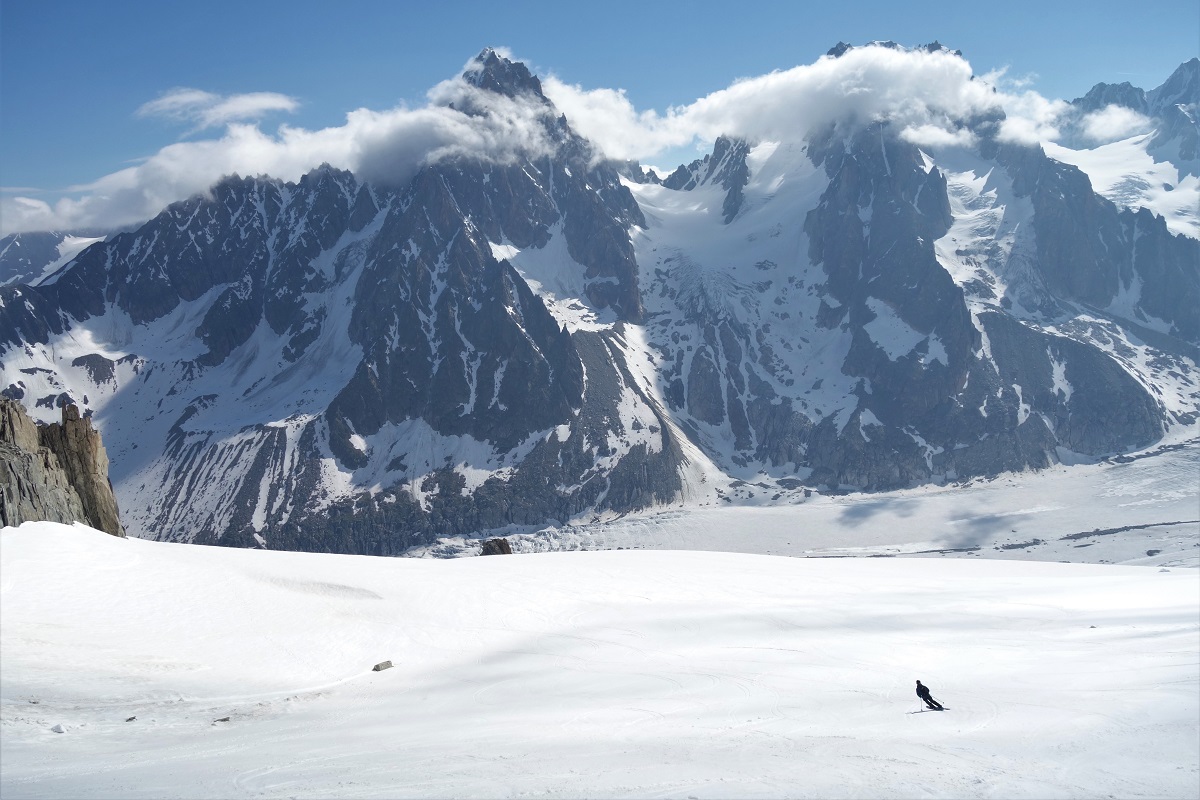
    Grands Montets skiing just grand on summer ski season opening day, 16th June.

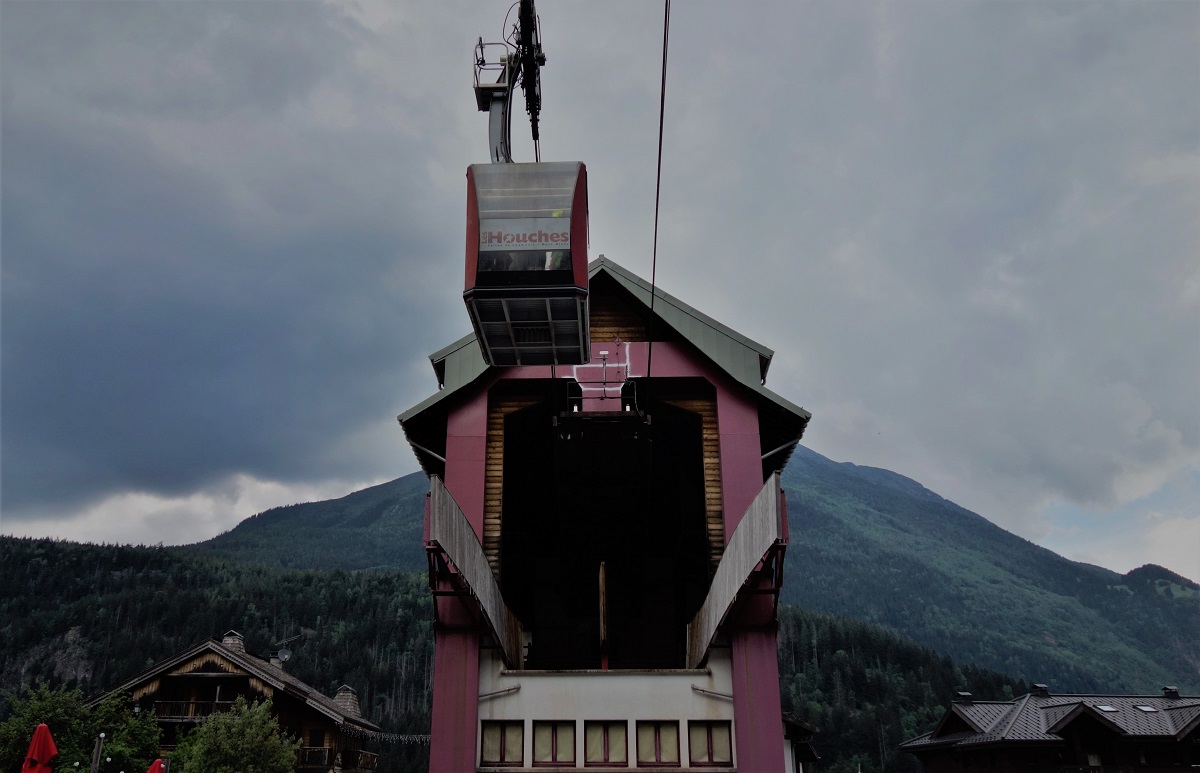
    Les Houches: Bellevue and the Tramway du Mont Blanc for now, Prarion opens at the weekend. Some work’s being done on the official DH trails and they’re closed for now but the other trails are in pretty good nick. And mind the last tramway up the hill is 1510 at the moment…

    I was on my own, what exactly do you expect from the photography after 6 years?

    Brevent: The Chamonix-Planpraz lift has been open on and off for most of the spring, so the trails are worn in, everything is clear enough and it’s just the usual tech to worry you. The Planpraz – Brevent stage opens this weekend, and it all goes off limits again, as usual, for the July-August bike ban.

    Flegere summer 2018. Not a great photo, technically nor literally.

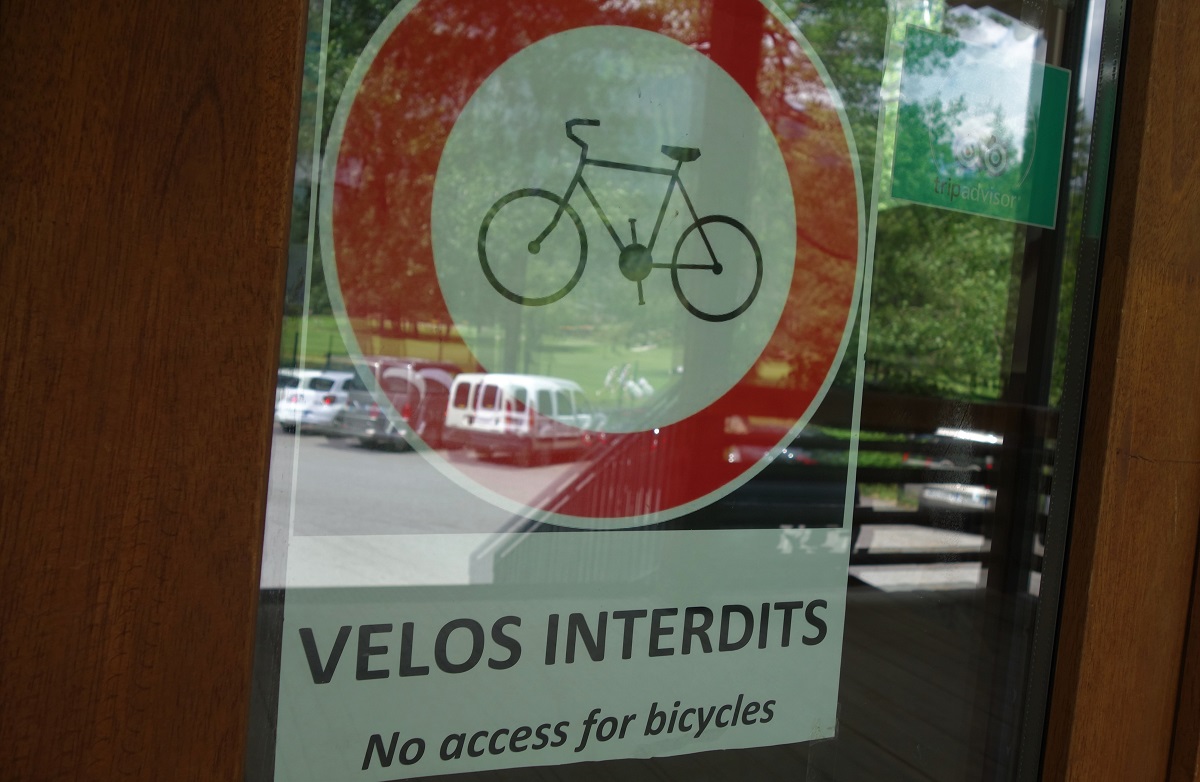
    Flegere: Is currently closed to bikes, the apologetic liftie held some hope that this might change at some point, but the lift will be VTT interdite for sure during the July-August bike ban. As for the trails, which you can get to with a wee bit of effort fae Brevent, the 4×4 access road is closed for a pipeline to be installed, the descent to Floria / Les Praz has some trees down on the upper section. Lower down there’s been some work to smooth off the trail a bit but otherwise it’s just as grand and tyre and rim destroying as ever.

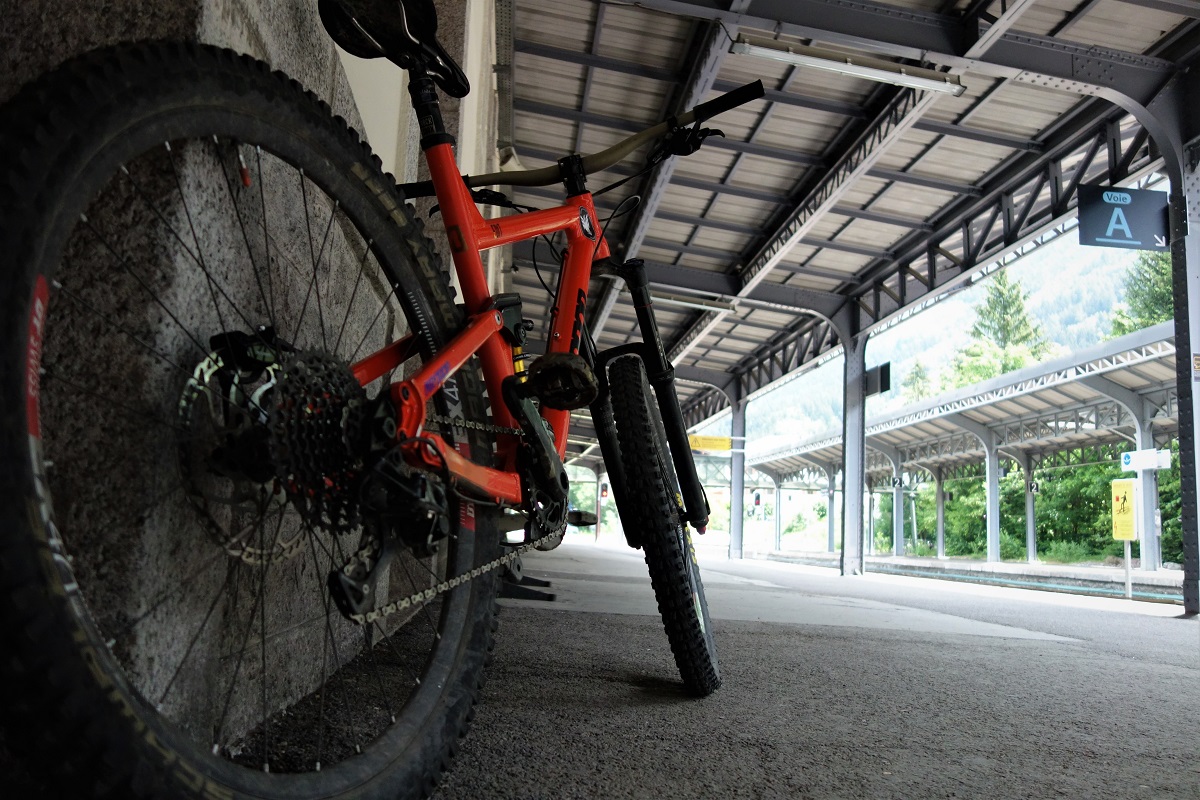
    Bike by a train. The year round valley uplift.

    Bikes then. In six years the blog’s got through two Lapierre Spicys, a Canyon Strive and now this abused beast, the Airdrop Edit. In the last 12 months it’s dropped over 215,000m of descent in France, Italy, Switzerland and Canada, trundling about 3300km in the process. Which gives an average gradient of 6.66%. The number of the beast. Spooky eh.

    Oban Cycles roof drop. In hindsight, the trials bike was a better choice for this... Cheers for the photo Gordon

    Three times older than this blog is this picture. A teenage me eschewing gas-to-flat with pedalhop-to-uphill. More importantly, I’m on a Kona Stab from back when DH bikes first started to sort themselves out. Before this bike I had an old GT LTS DH, like wot Peaty rode, that rocked a whole 140mm of rear travel, 140mm wheel base and, obviously, snapped (this happens a lot when buying not really fit for purpose products that’ve had a few less than careful owners). That Kona was the first of the generation of bikes that could survive the abuse they were getting. It’s just a shame they weighed so much.

    All the good of the Stab, and none of the bad. Cracking shot courtesy of Soren Rickards

    The Edit has a lot in common with the Stab. In 1998 the price for the Stab frame and an inline Fox vanilla R coil shock was £1149. The price for the Edit frame with inline Cane Creek coil shock, £1299. 13% inflation over 20 years, they’d be happy with that in Venezuela. And, having made a geometry comparison table between the two bikes, I think I’ve found where that inflation went. The top tube.

    Bike Stab 99 Edit 17
    Frame Size M L
    Head Angle 69 66
    Seat angle 72 76
    Top Tube 582 640
    Chainstay 432 435
    Wheel-base 1087 1220
    Fork Offset 33 46

    There will be some new trail content coming soon here, but I need to finish the trail first, and then there’s some promising looking lines on maps that need followed. And… Basically, bear with it and there’ll be something good to read along at some point. Cheers and here’s to another 215,000m/6 years of gradually rising standards.


  • Scaphoid stories

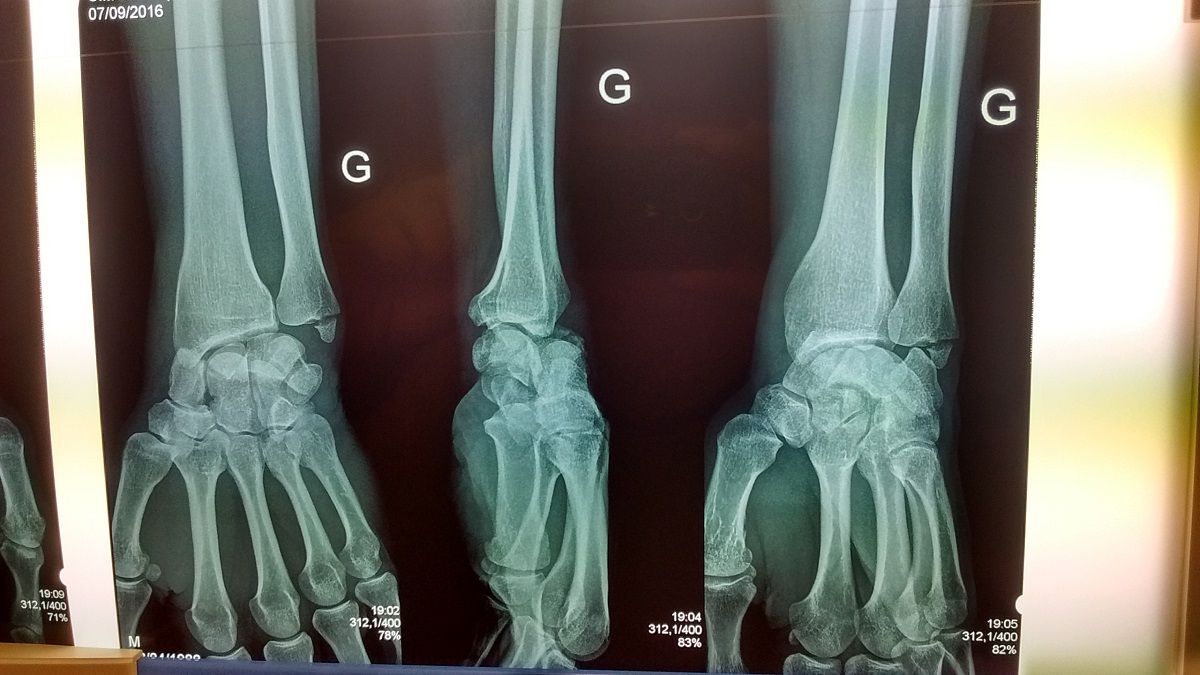
    I call this piece "six months of scans piled on the table"

    What do Nico Vouilloz, Blenkie, Katy WintonCameron Cole, Adam Brayton, Remi Gauvin, Cedric Gracia (and many, many more) have in common?

    Yup, they’re faster than you*.

    And they’ve all broken their scaphoid(s).

    I didn't break anything here, but you get the idea, Toby on the conveniently located camera.

    I also have this in common, in amongst my 20+ broken bones from head (left lower orbital) to toe (left 5th phalanges proximales) I can include my scaphoid. I might also be faster than you, but then again, mibbies no.

    When I broke my scaphoid I struggled to find good information online relative to biking so there’s a content niche there to exploit, but before that, some caveats:

    1) Why are you trying to diagnose and heal your wrist online? Go to a bloody doctor.
    2) Stop reading about scaphoid injuries online, all you’re going to find are the bad news stories where there was non union and the hand fell off**, no one puts up the tales of when they broke their wrist, followed medical advice and returned to riding fine a couple months later.
    3) I’ve dealt with the Scottish NHS and Haute Savoie medical system. Your mileage may vary.

    Caveats done.

    The small bolt nicely shows exactly where the scaphoid is. Handy that.

    Let’s start at the beginning, what is the scaphoid? The scaphoid, or navicular if you’re American, is one of the carpal bones of the wrist, situated towards the base of the thumb where the radius (the bigger of your 2 arm bones) meets the wrist. If you put your thumb into the hitchhiking thumbs up position, then prod a finger into the triangle made by the tendons of the thumb by the junction with the arm, you’ll probably find your scaphoid. If that’s too hard, the scaphoid is the one with the small bolt in it, image above. The scaphoid is different to the majority of bones in the body in that most of the blood supply comes from the distal (finger) end of the bone then flows through the bone to the proximal (arm) end rather than having equally good connections at either end. It’s the most common bone to fracture of the wrist, and the most common fracture mechanism is a fall to outstretched wrist.

    What sort of breaks are there of the scaphoid? Firstly breaks range from tiny wee cracks where the bone is still mostly intact and stable, through to completely severed bones or a ‘displaced fracture’ in medic speak. Tiny wee cracks in a stable fracture is what you want the doctor to say, displaced fracture isn’t. The location of the fracture on the scaphoid is important too. Fractures at the finger and thumb end, or ‘distal pole,’ are better news than in the middle, or ‘waist,’ of the bone. In turn, a fracture at the arm end of the bone, or ‘proximal pole’ is the slowest to heal.

    Why is breaking a scaphoid bad? Normally when you break a bone it’s a fairly quick return to the bike, especially for pros who have a far better range of health care, physio and drugs available to help them bounce back. The scaphoid is generally not a quick return, pro or not. When a bone is broken it relies on a good blood supply to bring the assorted materials required for creating the callus and ultimately reuniting the bone. As the scaphoid gets most of its blood from just the one end of the bone, when you split that bone in half it leaves the proximal, or arm, end of the bone poorly provided with blood and hence not getting supplied with all the healing goodness required. To further compound matters, breaking a bone is generally the result of trauma so there’s a good chance the soft tissues of the wrist will be damaged and swollen and the blood supply further constricted.

    This is my wrist about 3 hours after the crash. This is not what a wrist should look like and it was about now I was told I was probably going to have wrist permanently fused :-(

    How can you tell if your scaphoid is fractured? Easy, you get off google and go to a hospital where they have a range of highly trained professionals and expensive diagnostic machinery. Admittedly even then it can be hard to diagnose immediately due to other trauma so it’s not uncommon for the wrist to be immobilized as a precautionary measure and you telt to come back 5 days or so later when the swelling’s gone down a bit for a better look.

    Let’s assume you’re off to the hospital anyway.

    If you’ve crashed and landed on your hands, you might have fractured something in your wrist. Pain and stiffness in the wrist is a good indication something’s wrong. Being unable to get your thumb into the hitchhiking position another sign, and pain or loss of strength when trying to pinch something between fingers and thumb is yet more indication. When I broke mine it was fairly easy to tell as I’d put my left arm bones through my wrist, snapping the scaphoid cleanly in half, breaking my ulna and fully dislocating my wrist (I’d also broken some bones in my right arm and wrist, but my attention was kinda focused on my left arm at the time, a good reminder that the bit that hurts might not be the only issue post crash) however friends have broken their scaphoid and not had it diagnosed for up to 6 weeks, in which time they’d kept riding, gone on road trips, ridden some MX… My x-rays also showed I’d previously broken several other bones in my wrists and not known. In summary, if it hurts, go to the fucking hospital.

    So you’ve broken your scaphoid, what are the immediate medical options? Well, what country you’re in and what the surgeon’s experience is all have a bearing here, but generally it’s one of two things. For a non displaced wee fracture of the distal end of the scaphoid, then immobilization in a cast for at least 6 weeks is the probable outcome. A fully displaced fracture of the proximal pole will most likely require surgery. A fracture in between these extremes will receive a treatment in between. The younger, healthier and/or more active you are, the more likely it is you get surgery. Surgery is generally ‘internal fixation’ a.k.a. ‘screwing the bone back together’. This is most commonly in the form of a Herbert screw which is headless screw with two different thread pitches that tighten the two halves of the bone together as it’s inserted and gets buried in the bone forever, but other methods exist.

    Four months after crash. I'm not saying one pole skiing is a good idea for the wrist, but it's a good idea for the head.

    What are the secondary medical options? This is where it gets interesting. The above information is pretty easy to glean from a few hours of scrolling through the internet. Information of how to maximise your chances of getting a quick recovery is harder to find.

    Firstly there’s the easy gains. Don’t use the arm. It’s been immobilized for a reason, going biking with your arm in a cast is not going to help matters.

    Next, do everything you can to maximize the quantity and quality of the blood supply to the scaphoid. Ultimately it’s the blood that’s going to supply the required materials and remove the waste so you want this to be as good as it can be (a 2015 study where old mice were given blood from young mice showed a huge increase in bone fracture healing speeds, so going full vampire might help older readers…). Hence, avoid alcohol, salt and smoking. Obviously as a Scot my normal evenings activity is to sit on the sofa with a fish supper, a can of Super T and 20 benson and hedges listening to the Proclaimers*** so that had to change.

    Getting more marginal in the gains, your diet can make a bit of a difference. Bone healing uses a lot of calories, a major bone fracture might need you to treble your calorie intake. The scaphoid is not a major bone, in fact it’s tiny, so you don’t need a massive increase in food, but you might as well try and improve the quality of what you’re eating to ensure that tenuous wee bugger of a bone joins. Fracture healing is a hugely complex process that’s still not completely understood, but there are assorted minerals and vitamins you can take supplements of that might improve blood supply and healing. Firstly, make sure you are eating enough protein, one of the major building blocks of bones. You don’t need to be drinking milk/steak smoothies, but bean sprouts, broccoli, spinach and the like are all high in protein and full of other useful nutrients. The generally agreed on minerals are calcium, iron and zinc whilst the alphabet of vitamins focuses on A, C, D, E & K. Beyond these there are all manner of articles proposing the myriad benefits of whatever the website happens to be selling.  By all means go for it, but do a bit of research before hand. You should get sufficient of them already from a healthy balanced diet, some supplements might help, some might make you think they’re helping, some might do nothing but some might actually hinder healing and that’s probably best avoided.

    A number of anti inflammatory drugs also affect the healing process by inhibiting crucial enzymes, so unless prescribed don’t start necking ibuprofen or the like to try and help. Instead foods high in Omega 3 and Vitamins C & E help with the natural anti inflammatory mechanisms within the body and work to remove the waste products (free radicals, a band, terrorist group or medical term depending on your frame of reference) of the fracture healing process. So a nice kale and spinach salad with lemon dressing then, though the most efficient way to get omega 3 does seem to be from oily fish such as salmon or mackerel.

    You might be able to get access to a bone growth stimulator. These emit electromagnetic or low powered ultrasound waves, depending on the device, and some studies have shown improved healing times with their use. Certainly there doesn’t seem to be any negative side effects, so if you have the opportunity it’s probably worth giving it a bash.

    It seems an obvious solution that if you want to increase the blood supply to the wrist, you should go and exercise and increase the blood flowing round your body. Simples aye? Unfortunately there doesn’t seem to be any evidence to back this one up, although it’s likely your physio will give you some exercises that might help a little. There are plenty studies that show a considerable link between exercise and mental health however. There are also a number of studies linking mental health and healing rates. The happier you are the quicker you heal, so if the idea of weeks or months away from exercise has got you depressed, then finding some form of activity that won’t risk the delicate joining of the scaphoid but stops you going stir-crazy is probably a good idea.

    Five months after fracture and the wrist is strong enough to drink a cup of tea. This is a very important moment for me!

    How long is going to be before I can play out on my bike? Healing can take a long time. A very long time. If you’re lucky you can be in a cast for 4 weeks, another couple weeks of rest and you’re back on the bike. Normally it’s more like three plus months away from the bike. Eight months is not uncommon. It took me five months before my surgeon was confident that there was bone union and another 3 months before he was happy enough for me to start “light exercise” of the wrist. 12 months off the bike is still better than never riding again so if that’s what it’s taking to heal then that’s what it’s taking to heal. It’s not what you want to hear but shit happens.

    For the first few months of my recovery I would be asking the surgeon roughly how long he thought it would take me to get back on the bike, then if he thought I would get back on the bike. The response centered on the phrase “gros traumatisme” and avoiding answering, however I’ve been told I wouldn’t ski at a high standard again after a leg injury and that I’d not have a working shoulder after 30, so don’t get too disheartened by any lack of enthusiasm for your return to biking. Anyways, after all this you need to start physio to get back on the bike. Listen to your physio and do what they tell you. If you’re not getting the treatment you think you need, change. Go private, whatever.

    One of the first rides back after 8 months off the bike. Braces, physio and patient friends are grand!

    How do I go biking again? Even once you get the all clear for returning to the bike it’s likely you’re going to need to protect the wrist for the first 12 months, or possibly forever. At first your mobility will be much restricted and the whole arm, wrist and hand will be weaker, even if you’ve done all your physio. There are a variety of wrist braces out there, ranging from the cheap and basic through to massively expensive. Within reason, you get what you pay for. The more expensive braces, particularly those that originate from motocross, allow you to regulate the range of movement you have before they kick in and can help you gradually increase the load the muscles are taking.

    I use the Allsportsdynamics IMC/Sport wrist brace which I chose by looking at all the riders listed above that have broken their scaphoids and noticing that they were almost all using variations of that brace. The Mobius brace gets good reviews too. If using the Allsportsdynamics brace then get the glove pockets too as it’s much better than bodging it onto your hand with velcro.

    Twenty months after I broke my scaphoid (and ulna and had 3 surgeries to dis-dislocate my wrist) and following lots of help from Janie and the rest of the team at Clinique du Sport in Chamonix, I have about 60% mobility, 75% strength and get all sorts of pain and discomfort during riding. But, with the brace, I can on a good day ride more or less as I used to and I suspect it’s my head rather than my body that’s stopping me from get fully back to where I was. It turns out after enough injuries you start to lose interest in getting hurt again. You might be lucky and don’t need a brace afterwards. I do. It’s better than not riding.

    A couple weeks after my crash I was meant to be going to Whistler. 13 months later, I got to go to Whistler. I rode A-Line a bit. It's good to have a target....

    This has probably been my longest post ever, and if you’ve managed to read through all that then I wish you all the best with your recovery. What I won’t do is wish you luck, luck has nothing to do with it. Ultimately YOU need to take charge of healing. The A&E team, the orthopedic surgeon, the physio will all try and help you heal, but if you don’t take control of your injury and work with them, look at what they’re doing, ask questions, see how you can heal better, then how do you expect to get back riding quickly? All those riders up there have come back from injury stronger again and again. They don’t do that by ignoring the issue, they do it for the same reasons they are better than you on a bike, because they keep trying, keep working, until they’re sorted.

    I'll not lie, missing trips like this because an injury kept me off the bike forever would get me down, but I remind myself that this was so good because I shared it with friends, the bike was just the medium for it. There are other sports, there are other activities, the people are the important part.

    Further reading. I canny recommend Dave MacLeod’sMake or Break‘ highly enough. Focused on climbing injuries, but the mechanisms for healing described within are valid across all injuries. Whilst I’m at it, as sporting self help books go, his ‘9 out of 10 climbers…‘ is pretty good reading too.

    I’d also recommend having a look at a couple of online articles by injured mountain bikers which will hopefully help put things in perspective, namely Lorraine Truong, Tara Llane and Martyn Ashton

    Twenty months later, 95% back. That'll do me.
    *Unless you’re Aaron Gwin, in which case, hiya!
    ** I’ve not read of someone’s hand falling off, though some of the MX injuries ain’t far off.
    ***There is no medical evidence yet linking the Proclaimers to delayed bone union.

  • Les Arcs: Putting the Fun in Funiculaire

    It's going to be so yuge, we will never tire of winning. Ok, maybe we'll get a little tired of winning, but there will be yuge winning. I got Melania a card.

    Ah spring. Where the days get warmer, the snow melts away, the skiing day gets shorter and the bike rides get longer.

    Then we start moaning about having to pedal up the hill and look about for ways we can cheat and confuse the insulated gore-tex jacket wearing majority by cadging a lift up with them before everything closes until summer season proper. Some instagram based FOMO triggered by Emily Horridge and her shots of riding off the Les Arcs funicular prompted the car getting pointed south to the Savoie…

    Where would you rather be, riding this off a lift....or skiing slushy bumps. Hard question that.

    In the past I’ve tried to keep the blog kinda semi-relevant to the “Chamonix” bit of the title by writing about spots less than an hour from town. This got a bit stretched when the first Finale entry appeared, and pretty much abandoned when Whistler got tripped to. Still, I’ve driven to Bourg St Maurice in about 90 mins from Chamonix before, so I figured that it’d be fine to include, and also figured that if we were meeting Emily at the lifts at 11, then picking up Lorne and 9 and Toby just after should give us plenty time. Except, we’ve all got new bikes since I last tried putting 3 bikes and 3 bodys inside the car. And today I’m the shortest of the crew, not the tallest. And I forgot cars need fuel to move. And it turns out there’s more traffic during the day than at double espresso in the morning.
    Anyways. 1hr late, we were ready to ride the funicular.

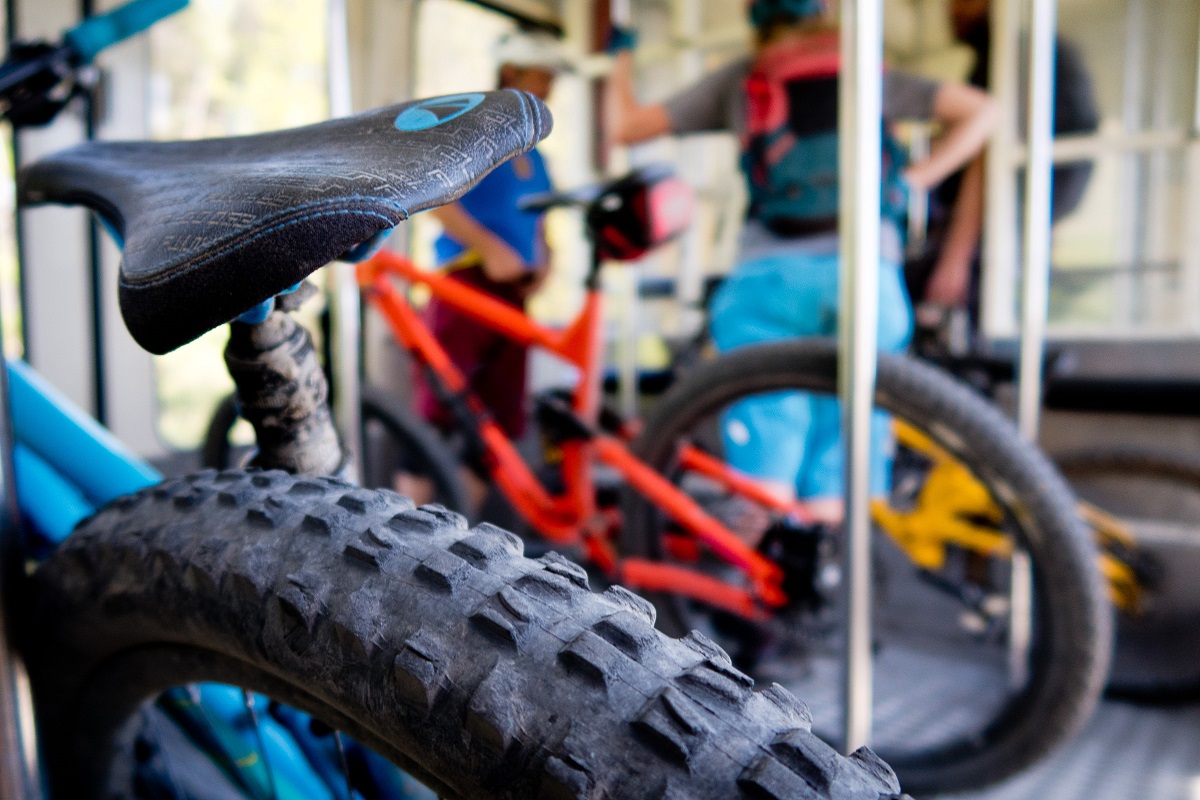
    Bikes on a train. Bit more modern than the tramway du mont blanc train too.

    You canny buy a VTT pass yet (it’s still winter mind) but handily the 19euro pedestrian pass lets you ride the lift all day, which is pretty much all day, 0800 to 2000. Good value that. A couple of minutes and 800m vertical later we step out into Les Arcs 1600 and head to the local trail everyone’s heard of.

    Black 8.

    Black 8. Lorne dressed appropriately, but forgot to give the bike the memo.

    Everyone’s heard of it because it’s really good. You could probably spend a day just starting on the official trail and experimenting with the many variations each lap and not get bored.

    The official Black 8 line was reminiscent of some of the Whistler bike park trails. Even when you didn’t know what was coming up, if you were riding at the right “flow” speed for the bit of trail you could launch off pretty much whatever you saw, safe in the knowledge there would be a landing more or less in the right place, a catch berm to steer you in the right direction, and everything would be just fine.

    Emily hors-piste on (or off?) black 8

    Well, until our last lap, but we’ll come to that later.

    Yet more black 8 dustbowl goodness. Can you tell Lorne and I did one more lap? Just to get photos for y'all obviously. We got nowt out of it.

    Like I said, you could probably lap the variations of Black 8 all day and leave feeling satisfied with your 19euro investment, but we were riding with locals, so obviously we weren’t going to stick to the marked line….

    Heading away from the marked trails on a wee explore. Will you look at that sky! (Orbital, Fluffy Clouds anyone?)

    We rode a wheen of trails. I’m not exactly sure which was which, but names getting bandied about as well as Black 8 included Brown Pow, Secret Garden, Secret Secret Garden, Secret Secret Secret Garden (so secret Emily had only ridden S3G for the first time the day before, and was already showing it off to us!) Little Losinj, Schlitten Land, No Brainer.

    No idea what this trail was called. "Fun" would be a good name though.

    This is a lot of names, which mean very little to anyone who’s not ridden there or is in on the joke, so you’ll just have to either go and explore yourselves to find them all, or give Emily a shout. Though given the number of other trails we were hearing about for the summer when there’s more lift options, you probably won’t ride all of them even then.

    Crew! Riding solo's grand and all, but so's having a bunch of you out to share the fun.

    One trail does stand out but, the riding if not the name. After a road traverse from the top of the funicular and a brief climb, we’d been descending a fun, if rocky, trail through the edge of the forest and out into the fields for a while. As we got lower, the trail got faster. And faster. With Emily up front and Lorne trying to hold her wheel, I was next in the train to guess at the line through the dust and dodge the flying rocks. You could argue it would make sense for us to have left more space between each other for a clear run, but where would the fun be in that? Rattling along trying to hold pace with each other, yelling encouragement/insults as appropriate, trying to find theinsidelines and kicking up as much dust as you can. Ain’t that what everyone’s inner MTB wean wants to do? Actually you could probably also argue we should have been riding slower and wearing layers of cotton wool, but that’s by the by.

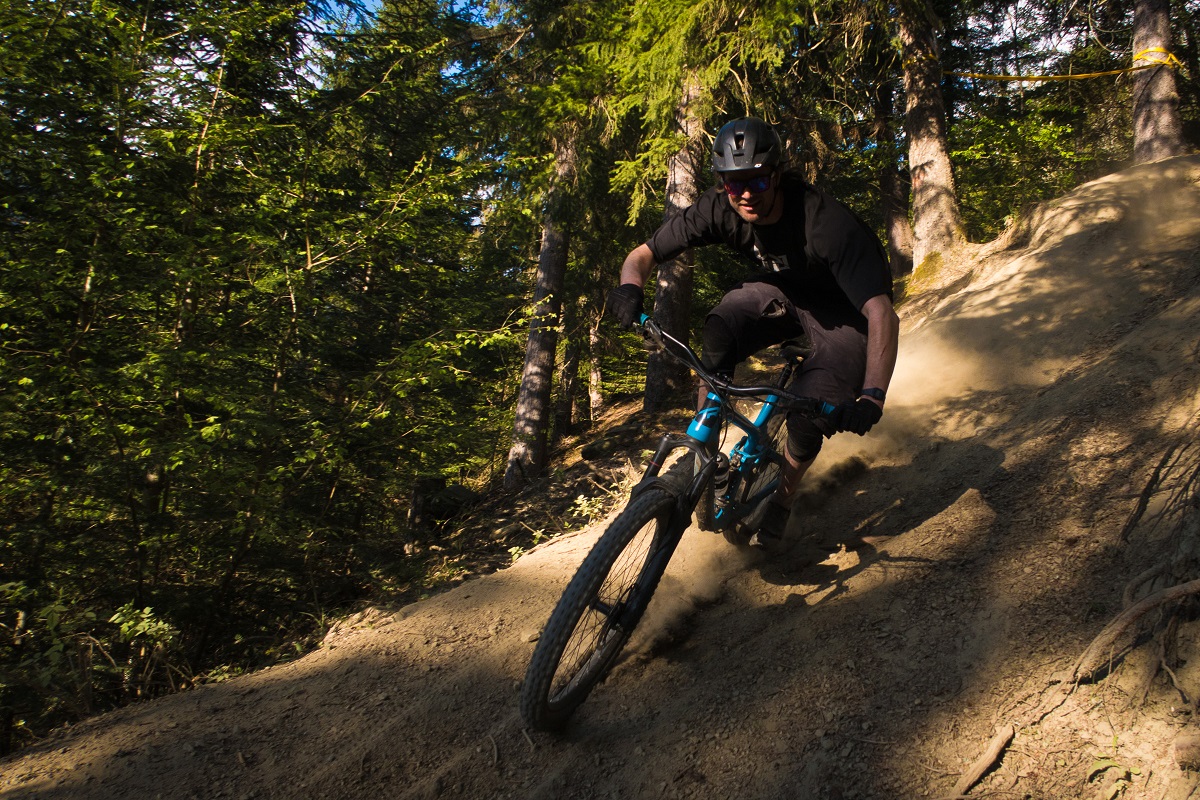
    Because dusty berms are fun. (though the aftermath isn't great for camera internals....)

    With such quick uplift, and no need to work out where we were going, we kept lapping the trails, 800m drop at a time. We’d stopped for a sandwich and damn fine coffee (no, really, best coffee I’ve had this side of Italy: Pause Coffee) at lunch time, but that was about 5 hours and 4000m ago.

    Emily testing if the woodwork survived the winter. There're so many wee lines dotted about the woods under the funiculaire

    It was about now that I re-learnt the lesson I seem to have to re-learn every summer. That a full day of riding off the lifts, not eating or drinking enough, and loose terrain generally results in an unexpected encounter with the ground.

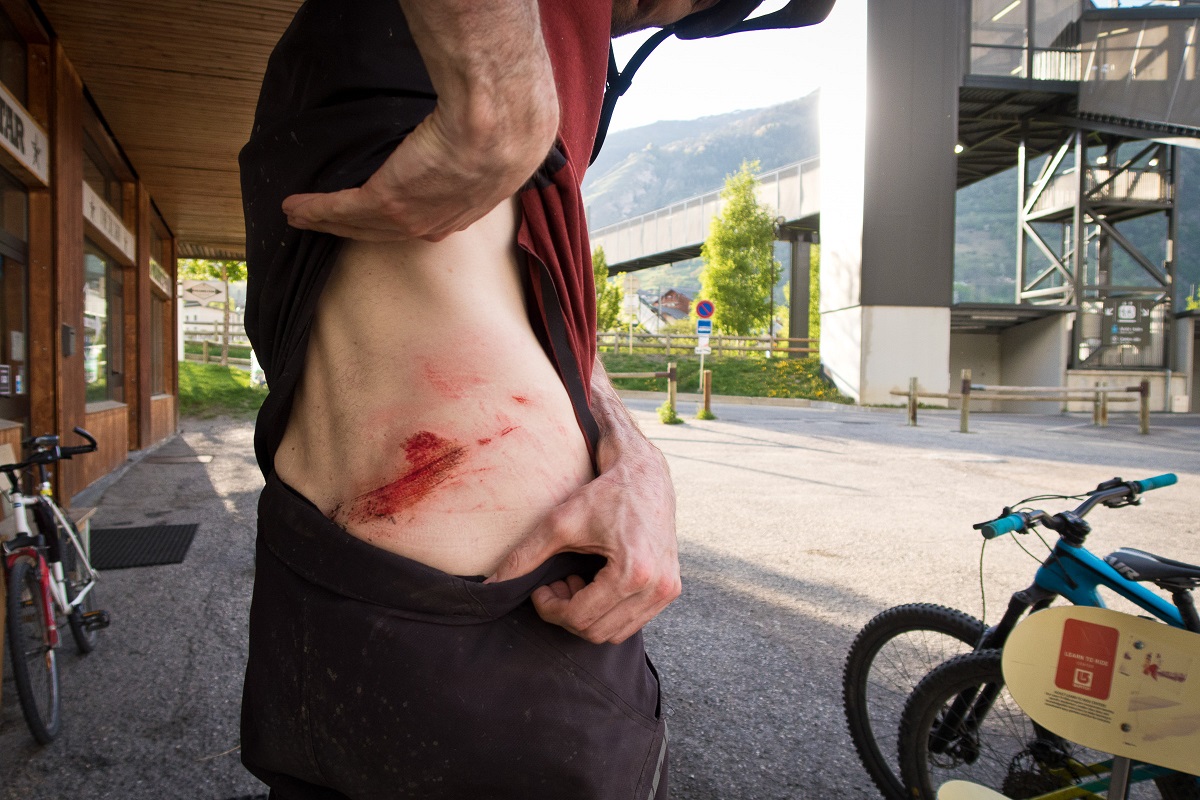
    I remembered this as, on Black 8, a long root garden knocked me off line and into the air, just where you really should be on the ground and getting composed for a wee off trail kicker. Instead of rolling up the kicker, I landed on the last couple inches of the takeoff, got fired over the bars, and found myself heading headfirst for a large tree stump. Faced with a choice between arriving on the stump with my head (new helmet is about 90euro, heads are best protected) and absorbing the impact with my left wrist (nope, not going to happen) I came up with a cheeky parcour right hand flip off the stump. I was so busy congratulating myself on my ingenuity I forgot to pay any attention to the next bit which was where I piled into the rocks and logs of the forest upside down and left assorted bits of skin behind.

    Still, first crash of the season out the way.

    Look how happy I am, it's like I don't know what's going to happen in 5 minutes time.

    That was kinda that for the day; bikes were starting to need fettling, bodies were tired, and we needed to get home, but plans were getting made already for a return trip once the lifts open again.

    Toby. He wheelie wants to come back. Wheelie. Weely. Really. See what I did there?

    Cheers once again to Emily and David for being grand hosts and showing us trails, secret trails, secret secret trails (you get the idea…) and where to go for coffee. If you’ve still not booked your alps trip for summer then you could do way worse than check out theinsidelinemtb. Don’t just take my word for it either, proper fast folk like it there too… And cheers to Lorne and Toby for the photos after I forgot my camera. Here’s hoping it’s the start of another class alpine summer.

    Crashing, what a bummer.